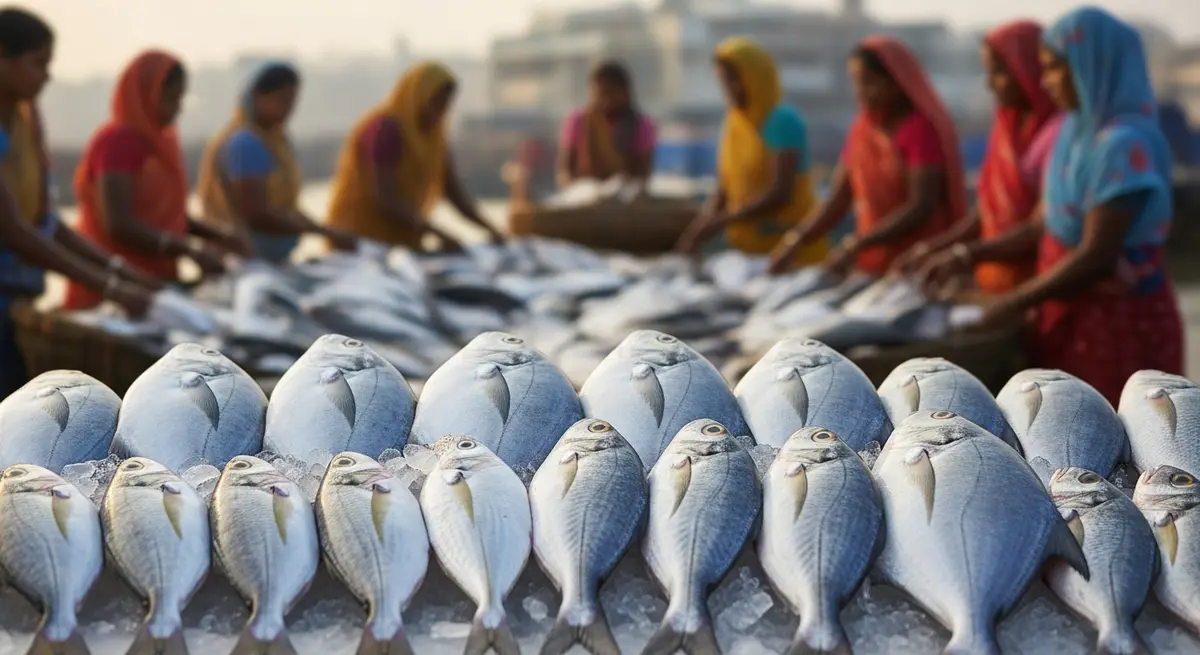
Fish in this guide: PomfretSurmai (Kingfish)PrawnsBangda (Mackerel)Bombil (Bombay Duck) Today's prices →
Why Fish Prices Change Every Day in Mumbai and Thane
Fish prices change daily because the catch changes daily. How much fish lands each morning depends on the weather, the sea and the season. Most sea fish is then sold by auction at the landing centre, so the price is set fresh each day by how much came in and how many buyers want it.
Want today’s numbers? See today’s fish prices in Thane, updated from verified sellers’ live listings.
- Rough sea or a small catch: prices go up that day.
- Calm weather and a big catch: prices come down.
- The monsoon ban (from June 1) and weekend demand push rates up.
- Bigger fish of the same kind cost more per kg.
- Compare only the same fish, size, unit and cut.
Below are the 7 things that move the price, and how to compare rates fairly before you buy.
7 reasons fish prices change
1. Weather and sea conditions
When the sea is rough, fewer boats go out and less fish comes in. Less supply means higher prices that day. Calm weather and a good catch bring prices down.
2. The size of the catch
Catches swing a lot, even year to year. In 2024, the Central Marine Fisheries Research Institute (CMFRI) reported that Maharashtra’s marine fish catch rose 47%, while India’s total fell about 2%. Day to day, the swings are bigger still. One boat’s good haul can shift a morning’s prices.
3. The landing auction
Most sea fish in Mumbai is sold at landing centres. Wholesalers and retail fish sellers bid for each lot. The auction price depends on that day’s catch and demand. Your seller’s price follows what they paid that morning.
4. Season and the monsoon ban
Fish have seasons. Bombil and bangda are plentiful at some times of year and scarce at others.
During Maharashtra’s monsoon fishing ban, mechanised boats stay in harbour from June 1. In 2026 the state extended the ban to August 15 for near-shore waters. Sea fish gets scarce and prices rise. See our monsoon fish guide.
5. Demand
Weekends, festivals and the days after fasting periods push demand up. When demand rises and the catch doesn’t, prices rise. Sunday is the busiest fish day in many Mumbai and Thane homes.
6. Costs between the boat and you
Fuel for boats, ice, labour and transport all add to the price. When these costs go up, they show up in what you pay.
7. Size and grade
A large pomfret costs much more per kg than a small one. Two “pomfret” prices can both be fair and still be very different. The same goes for prawns: bigger prawns cost more per kg.
What pushes the price up or down
| What happens | Price that day |
|---|---|
| Rough sea, few boats out | Up |
| Calm sea, big catch | Down |
| Monsoon fishing ban | Up for sea fish |
| Weekend or festival | Up |
| Fish in its season, good catches | Down |
| Higher fuel or ice costs | Up, slowly |
| Bigger size grade | Higher per kg |
How to read a fish rate
A rate on a board or a screen only makes sense with its details. Check these before you compare.
| Check | Why it matters |
|---|---|
| Unit | Pomfret and surmai are often sold per piece or by size grade. Prawns and small fish are usually per kg. |
| Size | Large fish of the same species can cost much more per kg than small ones. |
| Whole or cleaned | Cleaning removes the head, gut and scales, so cleaned weight is lower than whole weight. |
| Fresh or stored | Fish landed that day and fish stored from an earlier catch are not the same buy. |
| Delivery fee | A low fish price with a high delivery fee may cost more in total. |
How to get a fair price
- Compare the same thing. Same fish, same size, same unit, same cut.
- Know the season. Off-season fish costs more everywhere.
- Be flexible on the fish. If pomfret is expensive this week, bangda or surmai may be better value for the same curry.
- Shop on a weekday. Weekend demand pushes prices up in many markets.
- Pre-order for big fish. You lock in your order before the weekend rush, and the final price follows the actual weight.
- Ask your seller what came in today. A good seller will tell you what is good value that day.
- Check freshness, not just price. Clear eyes, red gills, firm flesh and a clean sea smell. Cheap fish that is not fresh is not a good deal.
When fish is usually better value in Mumbai
There is no fixed “cheap day”, because the sea decides. But some patterns hold.
- After the monsoon ban ends, as more boats return and supply recovers.
- In calm-weather weeks, when boats go out every day.
- On weekdays, when demand is lower than on Sunday.
- For fish in its season, when catches of that species are good.
The best check is still the day’s rates. Today’s fish prices shows live rates for each fish from verified sellers.
Comparing prices on Relifish
On Relifish, each verified seller sets their own prices and updates them as their stock changes. Delivery fees, if any, are set by the seller and shown before you pay.
- Same-day orders show the seller’s price for today.
- Pre-orders show a price when you order. The final price is set once the fish is weighed. Any difference is refunded automatically, or you’re asked to pay the balance (or can cancel for a full refund). If a seller shows a range, you pay the top of it.
You can compare sellers for one fish on its own page, for example surmai, pomfret or prawns. For every fish at once, see today’s fish prices.
Sellers on Relifish currently deliver in parts of Thane and nearby Mulund and Bhandup. Read how to order fish online in Thane, or call us on +91 91522 07607 (7:30 AM to 9 PM) or email relifishstore@gmail.com.
What to do next: open today’s fish prices, compare the same fish and cut across sellers, and see which sellers deliver to you.
Related reading
Frequently asked questions
Why are fish prices so high in Mumbai?
Prices climb when less fish lands and demand stays the same. Rough seas keep boats in harbour, the monsoon fishing ban stops mechanised boats for weeks, and popular fish like pomfret and surmai are in demand all year. Fuel, ice, labour and transport also add to the cost between the boat and your kitchen. Large, top-grade fish cost far more per kg than small ones.
Why is the fish rate today different from yesterday?
Because each day's catch is different. Most sea fish is sold at the landing centre, where the price is set by how much came in and how many buyers want it. A calm day with a big catch pushes rates down, and a rough day with few boats pushes them up. Your seller's rate follows the price they paid that morning.
How should I read a fish rate in Mumbai?
Check the unit, the size and the cut. Pomfret and surmai are often priced per piece or by size grade, while prawns and small fish are priced per kg. A rate for whole fish is not the same as a rate for cleaned fish, because cleaning removes weight. Only compare two rates when the fish, size, unit and cut all match.
When is fish better value in Mumbai?
Usually when the catch is big and demand is normal. That tends to mean weekdays rather than weekends, calm-weather weeks, and the weeks after the monsoon ban ends as boats return. Fish that is plentiful in its season, such as bangda when catches are good, is often better value than pomfret. Check daily rates before you buy, since every day is different.
Is a pre-order price final on Relifish?
You pay the price shown when you order. Because fish is sold by weight, the seller sets the final price once your fish is weighed on the delivery day. If it is lower, the difference is refunded automatically. If it is higher, you can pay the balance or cancel for a full refund. If a seller shows a price range, you pay the top of it.
How we write and check these guides: editorial standards
Share this article: