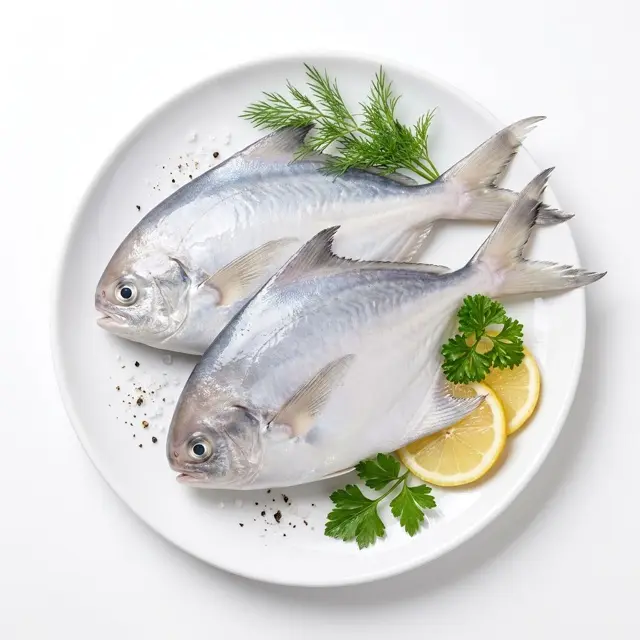
Fish in this guide: PomfretBangda (Mackerel)Surmai (Kingfish)PrawnsCrab Today's prices →
How to Store Fish in Fridge and Freezer
To store fish in the fridge, clean it, pat it dry, put it in a covered box and keep it at 4°C (40°F) or below. Cook it within 2 days, as the US FDA advises. If you need it longer, freeze it at -18°C (0°F), tightly wrapped. Thaw it in the fridge overnight, never on the counter. This guide covers each step, with times for fish, prawns and crab. Buying soon? See today’s pomfret and other fish on fish price today.
Key points
- Fridge at 4°C or below, in a covered box on the bottom shelf, and cook within 2 days.
- Anything for later in the week goes into the freezer on day one, at -18°C.
- Oily fish like bangda and tarli spoil faster than paplet or rawas, so cook or freeze them first.
- Thaw in the fridge overnight, never on the counter.
- If it smells sour or of ammonia, throw it out.
This is general food safety information. If someone in your family is pregnant, elderly or unwell, take extra care with storage and cooking.
Quick guide: how long fish lasts
Fridge times assume 4°C (40°F) or colder. Freezer times are for best quality; frozen fish at -18°C (0°F) stays safe, says USDA, but slowly loses taste and texture.
| Seafood (Marathi name) | Fridge | Freezer (best quality) |
|---|---|---|
| Any fresh fish (FDA rule) | Cook within 2 days | Wrap tightly and freeze |
| Oily fish, e.g. mackerel, tuna, salmon, mullet | 1 to 3 days | 2 to 3 months |
| Lean fish, e.g. sole, cod | Within 2 days (FDA) | 6 to 8 months |
| Raw shrimp (prawns, कोळंबी kolambi) | 3 to 5 days | 6 to 18 months |
| Squid (माकूळ makul) | 1 to 3 days | 6 to 18 months |
| Fresh crab meat (खेकडा khekda) | 2 to 4 days | 2 to 4 months |
| Live crab or lobster | 1 day | Not recommended |
| Cooked fish leftovers | 3 to 4 days | 3 to 4 months |
Sources: US FDA, USDA cold food storage chart on FoodSafety.gov, and USDA FSIS leftovers advice.
Where do Mumbai fish fit? The chart uses Western fish names. Bangda is a mackerel, and tarli is an oily sardine, so treat them as oily fish. Surmai is in the mackerel family too. For paplet, rawas or halwa, simply follow the FDA’s 2-day rule. Oily fish turn rancid faster, so freeze them sooner rather than later.
Step 1: get fish home and cold, fast
Most spoilage starts before the fish reaches your fridge.
- Make the market your last stop. Do not leave fish in a hot car or bag.
- Mind the 2-hour rule. The FDA says never leave seafood out of the fridge for more than 2 hours. On a day above 32°C (90°F), make it 1 hour. In a Thane summer, that is most days.
- Fridge it as soon as it arrives. If it is delivered, pick a slot when someone is home. Our first order guide explains what to check at the door.
Step 2: clean, rinse and pat dry
Fish keeps better clean. Gut, scale and gill it as soon as you can, or ask the seller to do it. Our how to clean pomfret guide shows the steps.
- Remove guts and gills. These spoil fastest.
- Rinse under cold running water. Clean the belly cavity well.
- Pat it dry with a clean cloth or paper towel. Water on the surface speeds up spoilage and freezer burn.
- Wash your hands, board and knife with soap and hot water. Keep raw fish away from cooked food and salads.
Step 3: store it in the fridge the right way
- Check your fridge temperature. The FDA suggests a fridge thermometer. It should read 4°C (40°F) or below.
- Use the coldest part. Usually the bottom shelf at the back, not the door. The door warms up every time you open it.
- Use a covered box. A steel dabba or glass box with a lid stops drips and smells.
- Keep it on the bottom shelf. That way, no fish juice drips onto other food.
- Do not pack it in a sealed plastic bag with water. Wet fish spoils faster.
- Plan your 2 days. Buy for today and tomorrow. Anything for later in the week goes into the freezer on day one.
Step 4: freeze it properly
Freeze fish while it is fresh. USDA notes that food frozen at peak quality tastes better when thawed than food frozen near the end of its life.
- Portion it first. Freeze in meal-sized packs, so you thaw only what you need.
- Wrap tightly. The FDA suggests plastic wrap, foil or moisture-proof paper. Squeeze out the air, then put it in a freezer bag or box.
- Label it. Write the fish and date. It is easy to forget what a frozen packet is.
- Keep the freezer at -18°C (0°F) or below. USDA says a small freezer compartment that cannot hold that temperature, or is opened often, is for short-term storage only.
Freezer burn shows as dry, greyish-brown leathery spots. USDA says it is not unsafe, only dry. Cut those spots away. If fish smells rancid after long freezing, throw it out.
Vacuum-packed fish
USDA says you can freeze unopened vacuum packs as they are. Thawing needs extra care. Fish can carry Clostridium botulinum, the germ behind botulism, and it grows best without air. Clemson University’s extension service advises:
- Never thaw vacuum-packed fish in its pack on the counter.
- Best: take the fish out of the vacuum pack before thawing, then thaw it in the fridge.
- Do not let vacuum-packed fish sit above 5°C (41°F) for more than 2 hours.
- Follow any thawing directions printed on the pack.
Step 5: thaw frozen fish safely
USDA lists three safe ways. Pick by how much time you have.
| Method | How | Then |
|---|---|---|
| Fridge (best) | Overnight on a plate, in a covered box | Cook within a day or two; can be refrozen |
| Cold water | Sealed, leak-proof bag under cold tap water; change water every 30 minutes | Cook at once; a small pack of about 450 g (1 pound) may thaw in an hour or less |
| Microwave | Defrost setting; stop while still icy but bendable | Cook at once |
Never thaw fish on the counter, in hot water or in the sun. USDA explains that the outside warms into the “danger zone” (4°C to 60°C, or 40°F to 140°F) while the middle is still frozen. Bacteria multiply fast in that range.
You can also cook fish straight from frozen. It will take longer.
Marinated fish
A haldi-chilli-salt rub is the first step of most Indian fish dishes. Store it safely:
- Marinate in the fridge, in a covered box. Not on the kitchen counter.
- Cook within the same 2 days you would give plain fresh fish.
- Do not reuse raw marinade as a sauce. USDA advises boiling a raw marinade first if you want to use it as a sauce. Easier: keep some masala aside before it touches the fish.
- Want to freeze? Freeze plain, cleaned fish and marinate after thawing. The bangda fry recipe uses this method.
Cooked fish and leftovers
- Fridge within 2 hours of cooking, says USDA. Use shallow boxes so curry cools fast.
- Eat within 3 to 4 days, or freeze for up to 3 to 4 months.
- Reheat until steaming hot. USDA advises 74°C (165°F) for leftovers. Bring curries back to a boil.
- Reheat only what you will eat. Fish curry with prawns gets rubbery if reheated again and again, as our kolambi curry recipe explains.
Signs fish has gone bad
The US FDA says spoiled raw seafood can smell sour, rancid, fishy or of ammonia. If it does, do not eat it.
| Check | Still good | Throw it out |
|---|---|---|
| Smell | Fresh, mild, of the sea | Sour, rancid, fishy or ammonia |
| Surface | Moist and shiny | Slimy or sticky |
| Flesh | Firm, springs back | Soft, mushy, stays dented |
| Eyes (whole fish) | Clear | Cloudy, sunken |
| Gills | Red | Brown or grey |
| Frozen pack | Hard, no frost | Thick frost, ice crystals, bendable fish |
When in doubt, throw it out. Cooking kills many germs, but it does not undo spoilage. Washing and cooking also cannot fix fish that was treated with chemicals. See our guide on how to check formalin in fish.
Buy only what you will cook
The simplest storage trick is not to store at all. On Relifish, you can order for today or pre-order for a later day, so fish arrives close to cooking time. Verified sellers in Thane clean and cut it the way you ask. They deliver in a 2-hour slot you choose, across Thane and nearby Mulund and Bhandup.
What to do next: check today’s fish prices, see fresh bangda (mackerel) or prawns from verified sellers. Then pre-order on the shop for the day you will cook.
Related reading
- 12 fish lunch box ideas for office and school tiffin
- How to clean prawns and devein them
- Monsoon fish guide for Thane
Sources
- US FDA. Selecting and serving fresh and frozen seafood safely. 2-day rule, 40°F fridge, wrapping, thawing, 2-hour and 1-hour rules, spoilage smells.
- FoodSafety.gov (USDA, FDA, CDC). Cold food storage chart. Fridge and freezer times for fish and shellfish.
- USDA FSIS. Freezing and food safety. 0°F, quality times, freezer burn, vacuum packs, refreezing.
- USDA FSIS. The big thaw: safe defrosting methods. Fridge, cold water and microwave thawing; danger zone.
- USDA FSIS. Leftovers and food safety. 2 hours, 3 to 4 days, 165°F reheating.
- USDA FSIS. Basting, brining and marinating. Marinate in the fridge; boil raw marinade before using as a sauce.
- Clemson Cooperative Extension. Thawing vacuum packed fish.
Frequently asked questions
How long can fresh fish stay in the fridge?
Cook fresh fish within 2 days of buying it, says the US FDA, and keep it at 4°C (40°F) or below until then. USDA's storage chart gives 1 to 3 days for oily fish like mackerel, 3 to 5 days for raw shrimp and 1 to 3 days for squid. In a warm Indian kitchen, the shorter end is the safer plan.
How long can I keep fish in the freezer?
Fish kept frozen at -18°C (0°F) stays safe, says USDA; the time limits are for taste and texture. For best quality, USDA's chart gives 2 to 3 months for oily fish such as mackerel and salmon, 6 to 8 months for lean fish such as sole, and 6 to 18 months for raw shrimp and squid.
What is the safest way to thaw frozen fish?
Thaw it overnight in the fridge. If you are short of time, seal the fish in a leak-proof bag and keep it under cold tap water, changing the water every 30 minutes, then cook it at once. You can also use a microwave's defrost setting if you cook straight after. Never thaw fish on the kitchen counter or in hot water.
Can I refreeze fish after thawing?
Yes, if you thawed it in the fridge. USDA says food thawed in the fridge can be refrozen without cooking, though it may lose some quality. Fish thawed in cold water or in the microwave should be cooked before it goes back in the freezer. Never refreeze fish that sat out of the fridge for more than 2 hours.
How do I know if stored fish has gone bad?
Smell it first. The US FDA says spoiled raw seafood can smell sour, rancid, fishy or of ammonia, and you should not eat it. Other signs are slimy skin, cloudy sunken eyes, brown or grey gills and flesh that stays dented when pressed. If in doubt, throw it out. Cooking does not fix fish that has already spoiled.
Can I store marinated fish in the fridge?
Yes. Marinate fish in a covered steel or glass box in the fridge, never on the counter, and cook it within the same 2-day window as fresh fish. USDA advises against using a marinade from raw meat as a sauce unless you boil it first. Keep some masala aside before it touches the raw fish if you want extra for serving.
How we write and check these guides: editorial standards
Share this article: