Fish in this guide: Prawns Today's prices →
Kolambi Curry: Maharashtrian Prawn Curry, Koli Style
Kolambi curry, also called kolambi kalwan or kolambi rassa, is a Maharashtrian prawn curry of coconut paste, Koli masala and kokum. Cook the gravy first and add the cleaned prawns only for the last 4 to 5 minutes, so they stay juicy. It serves 4 in about 45 minutes.
Key points:
- Buy medium sea or white prawns (kolambi), about 30 to 35 cleaned pieces per 500 g.
- 500 g cleaned prawns feeds a family of 4 with rice.
- Cook the coconut vatan (paste) until oil shows at the sides.
- Prawns go in last and need only 4 to 5 minutes.
- Eat it the same day or the next. Do not freeze it.
On a Sunday morning in a Koli kitchen in Thane, the first sound is the mixer grinding coconut. The first smell is onion turning golden in the kadhai. By eleven the kokum has turned the gravy a dusky orange and the rice is steaming.
Someone asks if the prawns have gone in yet. They have not. That is the whole secret of a good kolambi curry: the gravy cooks for twenty minutes and the prawns cook for five.
This is the recipe we make at home. It gives exact grams, the prawn size to buy and the cut to ask for. That way your prawn curry tastes the same every time.
Why does this recipe work?
- Prawns go in last. Many recipes simmer prawns in the masala for 15 to 20 minutes, which makes them chewy. Here they get 4 to 5 minutes on a low simmer, then a 5 minute rest off the heat.
- Grams, not cups. Every ingredient is weighed or measured in spoons. So 500 g of prawns always gets the same coconut and masala, and the servings scaler on the card stays accurate.
- The vatan cooks until oil shows. Raw coconut paste tastes flat and can split. Five minutes of stirring removes the raw smell and gives the gravy body.
- Masala blooms on low heat. Koli masala has a lot of chilli. One minute on low turns the oil red without burning it.
- Kokum is measured. Five petals give a gentle tang. Kokum gets stronger as it sits, so taste after 3 minutes and lift the petals out early if needed.
Kalwan, rassa or curry: what does each name mean?
Every coastal community in Maharashtra has its own kolambi curry. The name you grew up with often tells you the style.
| Style | Coconut | Masala | Sour note |
|---|---|---|---|
| Koli (Mumbai, Thane) | Raw grated coconut, ground smooth | Koli masala | Kokum |
| Malvani | Coconut and onion roasted deep golden | Malvani masala, tirphal | Kokum |
| Agri | Often none, onion and tomato base | Agri masala | Kokum or tamarind |
| CKP | Fresh coconut, lighter | Home masala, often milder | Kokum |
This recipe is the Koli version. The variations below cover the other three. Our piece on why fish curry doesn’t taste the same anymore explains how much the masala and the fish decide the final taste.
Which prawns should you buy for kolambi curry?
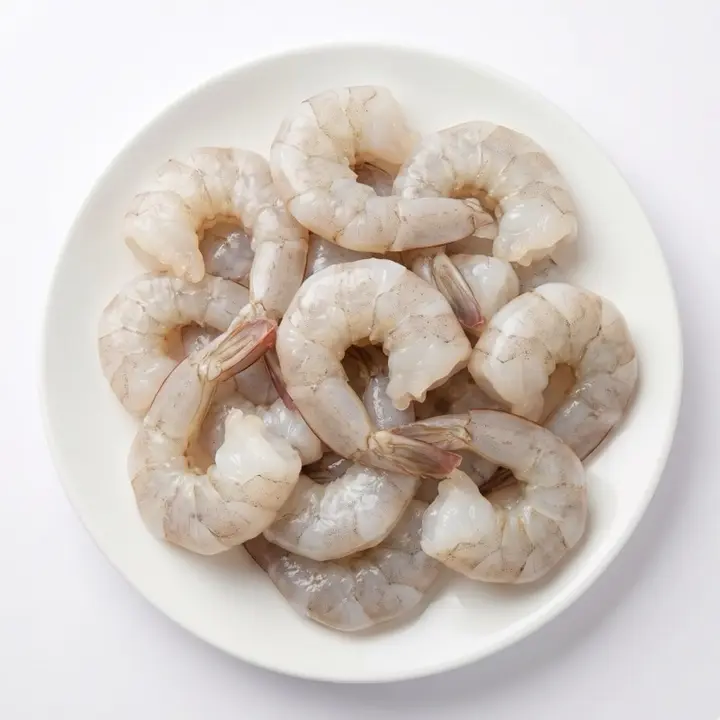
For kalwan, ask your seller for medium sea prawns or white prawns, head removed, shelled and deveined, tail off. Medium means about 30 to 35 cleaned pieces per 500 g. Small prawns shrink to nothing in gravy. Jumbo prawns are better saved for a fry.
| What you buy | How much to order for this recipe (serves 4) | Best for |
|---|---|---|
| Cleaned, deveined prawns | 500 g | Quickest: straight into the marinade |
| Whole, head-on prawns | About 1 kg (gives roughly 450 to 550 g cleaned) | Keep heads and shells for stock |
| Small prawns (kardi) | Not ideal | Better in a dry sukka or with vegetables |
| Jumbo or tiger prawns | Not ideal | Better as a tawa fry or prawns koliwada |
How to check freshness: fresh prawns smell of the sea, feel firm and look glossy. Avoid any that are slimy, smell of ammonia or have turned grey at the joints.
On Relifish prawns, verified sellers list sea, white, red and freshwater prawns when they have them. Sea and white suit this curry best. Our guide to prawn types and sizes explains the rest. Ordering for the first time? The first order guide shows how to add a cleaning note for the seller.
Cleaning at home: run a small knife along the back of each prawn and lift out the dark vein. Rinse twice in cold water and drain in a colander for 5 minutes. The full method is in how to clean and devein prawns.
A Koli trick for deeper gravy: simmer the heads and shells in 400 ml water for 10 minutes. Strain, and use this stock instead of plain water in step 6.
How long should prawns cook in curry?
Watch the shape, not the clock. Prawns are done when they turn opaque pink and curl into a loose C. A tight O means they have gone too far and will be rubbery. Switch off at the C and let the 5 minute rest finish the job.
Troubleshooting
- Gravy too thin: simmer 3 more minutes before the prawns go in, or stir in 1 tbsp extra vatan.
- Gravy too thick: add hot water, 50 ml at a time, and bring it back to a gentle simmer.
- Too sour: lift out the kokum and add a pinch of jaggery. Next time, taste after 3 minutes.
- Oily or split gravy: the coconut cooked too hot. Lower the heat and whisk in 2 tbsp hot water.
- Bitter taste: the masala or coconut burnt in step 4 or 5. It cannot be fully fixed, but a pinch of jaggery softens it.
- Rubbery prawns: cooked too long or boiled hard. Next time, keep the flame medium low once they go in.
Variations
- Malvani kolambi curry: roast the coconut and onion on low heat until deep golden, then grind. Use Malvani masala. Crush 2 to 3 tirphal into the gravy for its woody smell.
- Agri kolambi rassa, without coconut: skip the vatan. Cook 2 onions and 1 tomato until soft. Add 1 tsp ginger garlic paste and 2 tbsp Agri masala, then water, kokum and salt. It is thinner and spicier.
- Hirva (green) kalwan: grind the coconut with 30 g coriander leaves and stems, 3 green chillies and 8 garlic cloves. Skip the red masala and tomato.
- With potato and drumstick: add 1 cubed potato (100 g) and 1 drumstick in 5 cm pieces in step 6. Cook 10 minutes before the prawns go in, the Konkani home way.
What to serve with kolambi curry
Steamed rice or ukda (boiled red) rice is the classic match, because the thin kalwan soaks into the grains. Add tandalachi bhakri for scooping, a glass of sol kadhi, sliced onion and a wedge of lemon.
For a full Sunday thali, add a crisp bangda or bombil fry on the side. Many families say the kalwan tastes better the next day, once the kokum and coconut settle.
How to store and reheat kolambi curry
Cool the curry within an hour. Keep it in a closed steel or glass container in the fridge for up to 1 day.
Reheat only what you will eat, on low heat, and stop as soon as it starts to simmer. Boiling toughens the prawns. If the gravy has thickened overnight, loosen it with 2 to 3 tbsp hot water.
We do not recommend freezing, as the coconut gravy splits and the prawns turn rubbery. Cooking for later in the week? Make the gravy up to step 6 and refrigerate it. Add fresh prawns when you reheat. For more, see how to store fish at home.
Nutrition
One serving (curry only, without rice) works out to roughly 255 kcal, 19 g protein, 16 g fat and 9 g carbohydrate. This is our estimate, and it changes with prawn size and the coconut you use. Most of the fat comes from the coconut and oil, not the prawns.
India’s food tables, the Indian Food Composition Tables 2017 (ICMR-NIN), list tiger prawns at 14.25 g protein and only 0.74 g fat per 100 g raw. So the prawns supply most of the protein on the plate. To compare with chicken, see fish vs chicken protein per 100 g, or read are prawns healthy.
You might also like
- Bangda fry recipe: crispy Malvani rava tawa fry
- Prawns koliwada recipe
- Pomfret curry recipe, Malvani style
What to do next: check today’s fish prices in Thane, then order cleaned, deveined prawns from verified sellers in Thane, Mulund and Bhandup. For help with an order, call +91 91522 07607.
Kolambi Curry (Kolambi Kalwan, Koli Style)
Ingredients
Method
- Marinate the prawns. Pat the cleaned prawns dry. Mix them with 1/2 tsp turmeric, 1/2 tsp salt and the ginger garlic paste. Rest while you grind the vatan.
- Grind the vatan. Blend the coconut, small chopped onion, garlic, coriander leaves and coriander seeds with 120 ml water to a smooth paste. For Malvani style, roast the onion and coconut on low heat for 6 to 8 minutes until golden brown first.
- Cook the onion. Heat the oil in a kadhai on medium. Add the finely chopped onion and cook until soft and light golden at the edges.
- Bloom the masala. Lower the heat. Add the tomato if using, 1/4 tsp turmeric and the Koli masala. Stir for 1 minute until the oil turns red. Do not let the masala catch or it turns bitter.
- Cook the vatan. Add the coconut paste and cook on medium, stirring, until the raw coconut smell goes and oil shows at the sides.
- Make the rassa. Pour in 400 ml hot water, add the kokum and salt. Bring to a boil, then simmer uncovered. The gravy should coat a spoon thinly; kalwan is pourable, not thick like a masala.
- Add the prawns. Slide in the prawns with any marinade. Simmer on medium low for 4 to 5 minutes for medium prawns (6 to 7 for large) until they curl into a loose C and turn opaque pink. Do not boil hard.
- Rest and finish. Switch off the heat, add the chopped coriander, cover and rest for 5 minutes. Lift out the kokum petals if you prefer before serving.
Approx. per serving: 255 kcal · protein 19 g · fat 16 g · carbs 9 g
Frequently asked questions
How long should prawns cook in curry?
Add prawns only after the gravy is fully cooked. Medium prawns need 4 to 5 minutes at a gentle simmer and large prawns 6 to 7 minutes. They are done when they turn opaque pink and curl into a loose C shape. A tight O curl means they have overcooked and will be rubbery, so switch off the heat a little early and let the resting time finish them.
Which prawns are best for kolambi curry?
Medium sea prawns or white prawns, roughly 30 to 35 cleaned pieces per 500 g, are the best fit. They stay juicy in a 5 minute simmer and soak up the gravy. Very small prawns shrink and get lost, and jumbo prawns suit a dry masala or tawa fry better. Freshwater prawns work too but taste milder, so keep the kokum light.
What is the difference between kolambi kalwan and kolambi rassa?
Both are Maharashtrian prawn curries and the names overlap in most homes. Kalwan usually means the Koli or Malvani coconut gravy soured with kokum, served with rice. Rassa often means a thinner, spicier gravy, and in Agri homes it may skip coconut and use onion, tomato and Agri masala instead. Kolambi curry is the English catch-all for both.
Can I make prawn curry without coconut?
Yes. Agri style kolambi rassa skips the coconut vatan entirely. Cook 2 chopped onions and 1 tomato in oil until soft, add 1 tsp ginger garlic paste and 2 tbsp Agri masala, then add hot water, kokum and salt and simmer 5 minutes before the prawns go in. The gravy is thinner and spicier, and it goes well with bhakri.
Can I use frozen prawns for kolambi curry?
You can. Thaw them overnight in the fridge or in a sealed bag under cold running water, never in hot water. Drain and pat them very dry before marinating, because frozen prawns release extra water that thins the gravy. They often cook a minute faster than fresh prawns, so start checking for the loose C curl at 3 minutes.
Should I devein prawns for curry?
Yes. The dark line along the back is the digestive tract and can taste gritty or bitter in a light coconut gravy. Run a small knife along the back and lift it out, or ask your seller to clean and devein the prawns for you. Rinse twice and drain well before marinating so the curry does not turn watery.
How we write and check these guides: editorial standards
Share this article: