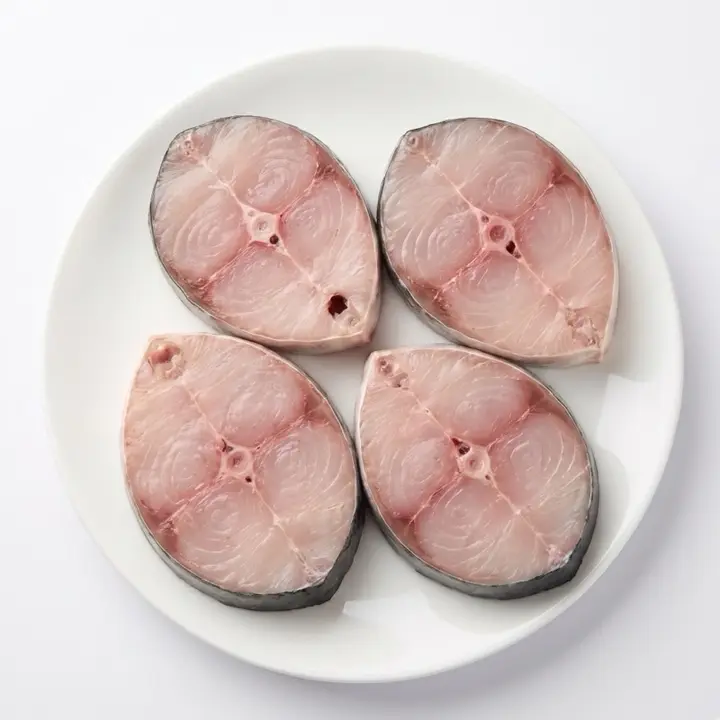
Fish in this guide: Surmai (Kingfish)PomfretBangda (Mackerel) Today's prices →
Is Fried Fish Healthy? Deep vs Tawa vs Air Fry
Is fried fish healthy? It can be, in moderation. A fish tawa fry with a little fresh oil keeps most of what makes fish good for you. Deep fried fish in reused oil is the version to avoid.
Fish fry is the heart of a Sunday thali in Thane and Mumbai. A rava fried surmai slice, a crisp paplet, a plate of bangda with lemon. So the question comes up in every family that is trying to eat better: should we stop frying fish?
You do not need to give it up. You need to understand what frying changes, and which kind of frying you are doing. This guide walks through it, with what ICMR-NIN and FSSAI actually say.
This is general food information, not medical advice. If you have a heart condition, diabetes or high cholesterol, ask your doctor or dietitian about your own diet.
What frying does to fish
Raw fish is mostly water and protein. Sea fish such as surmai (सुरमई) and paplet (पापलेट) also carry omega-3 fats. Per 100 g raw, IFCT 2017 lists surmai at 22.28 g protein and 1.05 g of EPA plus DHA (the main omega-3 fats). White pomfret has 19.02 g protein and 0.59 g EPA plus DHA.
Frying does three things to that fish:
- It adds oil. Water leaves the surface and some oil takes its place. The thicker and rougher the coating, the more oil it holds.
- It adds carbohydrate. Rava, rice flour, besan or a batter crust all add starch on top of the fish.
- It heats the oil hard. ICMR-NIN notes that long exposure of oil to high heat and air can produce highly oxidised, potentially toxic products. Reusing that oil makes it worse.
The fish protein itself survives frying well. The problems are the extra oil, the crust and the state of the oil you use.
Deep fry vs shallow fry vs tawa fry vs air fry
Here is how the four common methods compare in an Indian kitchen. Oil amounts are typical home quantities for about 500 g of fish.
| Method | Oil in the pan | What happens | Our verdict |
|---|---|---|---|
| Deep fry (kadhai) | 500 ml or more | Fish is fully submerged. A thick batter soaks up oil. The leftover oil is often stored and reused. | Occasional treat only |
| Shallow fry (pan) | 4 to 6 tbsp | Fish sits in a layer of oil. Less oil than deep fry, but a lot can still cling to the coat. | Fine now and then |
| Tawa fry (iron tawa) | 2 to 2.5 tbsp per batch | Thin film of oil, fish fried 3 to 5 minutes a side. Fresh oil each time. | Best of the fried options |
| Air fry | 1 tsp brushed per side | Hot air crisps the coat. Much less oil than deep frying. | Good, with a caution on overcooking |
| Steamed or grilled | 0 to 1 tsp | No frying at all. | Lightest everyday choice |
ICMR-NIN’s Dietary Guidelines for Indians 2024 add a useful detail on shallow frying. A thin layer of oil is exposed to more air, so it breaks down faster at high heat than a deep pot of oil.
But a shallow fry lasts only a short while, and the oil is usually not reused. That is why a quick tawa fry in fresh oil is a sensible home choice.
Reused cooking oil: what FSSAI and ICMR say
This is the part that matters most, and it is the easiest to fix.
When the same oil is heated again and again, it forms what FSSAI calls Total Polar Compounds (TPC). FSSAI has fixed a limit of 25 percent TPC, beyond which vegetable oil must not be used. FSSAI links these compounds with conditions such as hypertension, atherosclerosis and liver disease.
ICMR-NIN’s guidelines say the same in plain terms. Repeated heating of cooking oil generates harmful oxidative (polar) compounds and must be avoided. Used oil should not be mixed with fresh oil and reused.
For homes, FSSAI’s guidance note on used cooking oil is practical.
- Oil used once for frying can be filtered and used for curry, but avoid frying in it again.
- Use that oil within a day or two. Do not store it for long.
- Throw it out if blue-grey smoke appears, tough foam forms, it turns dark and murky or its thickness changes.
- Do not pour it back into the fresh oil bottle. Store it separately.
- Do not pour it down the drain. Mix small amounts with sand, sawdust, paper or food scraps and put it in the dustbin.
You cannot check TPC at home. So the simple rule is this: fry in fresh oil and use the leftover in that day’s curry. Do not save a “fish fry oil” jar for next week.
Restaurant and street fried fish is harder to judge. You cannot see how old the oil is. That is one more reason to make your fish fry at home.
How much oil is too much? ICMR’s daily limit
ICMR-NIN asks Indians to limit visible fat, which mostly means cooking oil, to 20 to 50 g a day. That is about 4 to 10 teaspoons per person, depending on how active you are.
| Who | Visible fat per day (ICMR-NIN 2024) |
|---|---|
| Sedentary adult woman | 20 g |
| Sedentary adult man | 30 g |
| Moderately active woman / man | up to 30 g / 40 g |
| Heavily active woman / man | up to 40 g / 50 g |
Now compare that with a fish fry. A tawa fry for 4 people uses about 5 tbsp of oil across two batches, and not all of it ends up on the fish. Split four ways, that is a reasonable share of one person’s day.
A deep fried, batter coated fish is harder to count. You cannot see how much oil the crust has soaked up.
ICMR-NIN also suggests sautéing, steaming, grilling, boiling or baking in place of frying for everyday cooking. So treat the fry as one part of the week, not the default.
How to make a healthier rava fish fry
You can keep the crunch and still cut the oil. These are small changes that work in a home kitchen.
- Pick the right fish and cut. Medium pomfret, bangda or 1 cm thick surmai steaks cook through fast on a tawa. Thick pieces need longer and soak up more oil before the centre is done.
- Pat the fish completely dry. Wet fish spits, sticks and drinks more oil. Dry it inside the slits and the belly too.
- Use a thin coat. Press the fish into fine rava mixed 3 to 1 with rice flour, then shake off the loose grains. A thin coat crisps well and holds less oil than a thick one.
- Measure the oil. Start with 2 tbsp on an iron tawa for 2 fish. Add 1 tsp around the edges after the flip, not a fresh pour.
- Get the heat right. Heat the oil until a pinch of rava sizzles at once and turns golden in 20 to 30 seconds. Oil that is too cool makes a greasy crust. Oil that smokes is too hot and is breaking down.
- Do not crowd the tawa. Two fish at a time keeps the oil hot, so the crust seals quickly.
- Drain on a rack. A wire rack lets extra oil drip away and keeps the bottom crisp.
- Use fresh oil for each frying day. Filter what is left and use it for that day’s dal or curry.
- Balance the plate. Serve one piece of fry with dal, salad, sol kadhi or a vegetable, not with a second fried item.
For step by step versions, see our surmai fry recipe, bangda fry recipe and pomfret tawa fry.
Is an air fryer the answer?
Partly. ICMR-NIN says air frying greatly cuts the oil absorbed compared with deep frying. Less oil generally means fewer calories.
It also adds a caution that is specific to fish. Air frying fish may lower its polyunsaturated (omega-3) fats and could raise some inflammatory compounds. Adding herbs to the fish may help reduce this fat oxidation.
What that means at home:
- Use the air fryer to replace deep frying, not steaming.
- Do not overcook. Take the fish out as soon as it is done.
- Keep herbs in the marinade: coriander, curry leaves, garlic and green chilli.
- Brush oil lightly. 1 tsp per side is enough for a crisp rava coat.
Our air fryer fish fry recipe has exact timings for surmai, pomfret and bangda.
Which fish and which method for which goal
| Goal | Better fish | Better method |
|---|---|---|
| Omega-3 for the heart | Surmai, pomfret, bangda, tarli | Tawa fry, steamed, curry |
| Weight loss | Rawas, bhetki, prawns | Steamed, grilled, light curry |
| Children | Pomfret, rawas, bhetki fillets | Tawa fry with a mild masala, or steamed |
| Weekend treat | Any firm fish | Tawa fry or air fry, fresh oil |
If you want a fish dish with no frying at all, try patra ni machhi, the Parsi pomfret steamed in banana leaf with green chutney. For more on choosing fish, read best fish for weight loss in India, fish for diabetes and omega-3 fish for heart health.
The bottom line
Fried fish is not junk food, and it is not a health food either. The fish brings protein and, for sea fish, omega-3 fats. The oil and the crust are where things can go wrong.
Fry on a tawa or in an air fryer, in fresh oil, with a thin coat. Count that oil in your day. And keep steamed, grilled and curried fish in the rotation too.
Fresh fish also fries better. It holds together, needs less handling and does not stick as much. Look for firm flesh, bright eyes and a clean sea smell. For a family of four, 500 g of fish (2 medium pomfret, or 4 surmai slices) is enough for one fry.
Check today’s fish prices in Thane and order cleaned and cut fish from verified sellers, delivered across Thane, Mulund and Bhandup. Ask for surmai “in 1 cm slices” or pomfret “cleaned, slit for masala”.
What to do next: order surmai slices for a light tawa fry this weekend, and follow our surmai fry recipe.
Related reading
- Healthiest Way to Cook Fish: Steam, Grill or Curry?
- Calories in Fish Curry: How to Count Any Indian Dish
Sources
- ICMR-National Institute of Nutrition. Dietary Guidelines for Indians 2024. PDF at nin.res.in. Guideline 7: other cooking methods in place of frying (page 51). Visible fat limit of 20 to 50 g a day, by activity (page 54). Reheating and reusing oil (page 55). Guideline 13: frying and shallow frying (page 84); air frying of fish (page 86).
- Food Safety and Standards Authority of India. RUCO (Repurpose Used Cooking Oil). FSSAI West Region. Limit of 25% Total Polar Compounds.
- Food Safety and Standards Authority of India. Guidance note: Handling and disposal of used cooking oil. PDF at fssai.gov.in. Household handling, discard signs and disposal.
- Longvah T, Ananthan R, Bhaskarachary K, Venkaiah K. Indian Food Composition Tables 2017 (IFCT 2017). ICMR-NIN, Hyderabad. PDF at nin.res.in. Table 1 (protein) and Table 7 (EPA, DHA): Vanjaram P087, Pomfret white P057.
Frequently asked questions
Is fried fish healthy or unhealthy?
Fried fish sits in the middle. The fish itself is a good source of protein, and sea fish such as surmai and pomfret also give omega-3 fats. Frying adds oil, and a thick crust adds carbohydrate. A tawa fry with little oil, eaten once or twice a week, is very different from deep fried fish in reused oil. This is general information, not medical advice.
Which is healthier: tawa fry or deep fry?
For home cooking, a tawa fry with 2 tablespoons of oil for a batch of fish is usually the better choice. Deep frying needs a full kadhai of oil and that oil is often reused, which ICMR-NIN and FSSAI both advise against. ICMR-NIN notes that shallow frying exposes oil to more air, but it lasts a short time and the oil is not reused.
Is air fried fish healthier than tawa fried fish?
It uses less oil. ICMR-NIN says air frying significantly cuts the oil absorbed compared with deep frying. It also notes that air frying fish may lower its omega-3 fats and raise some inflammatory compounds, and that adding herbs may reduce this fat oxidation. So an air fryer is a good option, not a magic one. Keep the coating thin and do not overcook.
How many times can I reuse oil after frying fish?
Ideally, do not fry in it again. FSSAI's guidance for homes is to filter oil used once for frying, use it for curries within a day or two, and not fry in it again. Throw it out if it smokes blue-grey, foams or turns dark and murky. Do not mix used oil with fresh oil or pour it back into the fresh oil bottle.
How much oil per day does ICMR recommend?
ICMR-NIN's Dietary Guidelines for Indians 2024 say visible fat, mainly cooking oil, should be limited to 20 to 50 g a day, about 4 to 10 teaspoons, depending on activity. Sedentary women are advised about 20 g and sedentary men about 30 g. All the oil in the day's cooking counts, including the oil in your fish fry.
Is fried fish okay for weight loss or diabetes?
An occasional light tawa fry can fit, but steamed, grilled or curried fish is a better everyday habit. A thick rava or batter crust adds carbohydrate and soaks up oil, and deep frying adds the most fat. Pair a small fry with dal, salad or vegetables instead of extra rice. If you have diabetes or a heart condition, ask your doctor or dietitian.
How we write and check these guides: editorial standards
Share this article: