Fish in this guide: PomfretRawas (Indian Salmon)Bhetki (Barramundi) Today's prices →
Patra Ni Machhi Recipe: Parsi Steamed Pomfret
Patra ni machhi is Parsi style pomfret in a sweet, sour and hot coconut green chutney. You wrap it in banana leaf and steam it for about 15 minutes. It serves 4 in under an hour and needs no frying at all.
Open a patra ni machhi parcel at the table and a puff of steam carries coconut, lemon and green chilli up to your face. Inside, the pomfret is soft and white, and the chutney has set into a bright green coat.
It is one of the best known dishes of the Parsi kitchen, and a fixture of the lagan nu bhonu, the Parsi wedding feast.
It is also one of the easiest ways to cook fish well at home. No frying, no spitting oil, and the parcel keeps the fish moist even if you go a minute over. This guide covers the chutney, the fold, the steaming time and which fish to buy.
Why this recipe works
- The chutney is balanced. Parsi green chutney is sweeter and more sour than a regular coriander chutney. Sugar and lemon are not optional. They are what make it patra ni machhi.
- The coconut makes it cling. Fresh coconut gives the paste body, so it stays on the fish and does not run into the steamer.
- The leaf seals in moisture. The fish steams in its own juices and the chutney, and picks up a light aroma from the leaf.
- Thick pieces. Pieces of about 2.5 cm cook evenly in 15 minutes and stay juicy. Thin slices overcook.
- A pre-salt with lemon. Fifteen minutes of salt and lemon seasons the fish right through and firms the surface.
Which fish to use
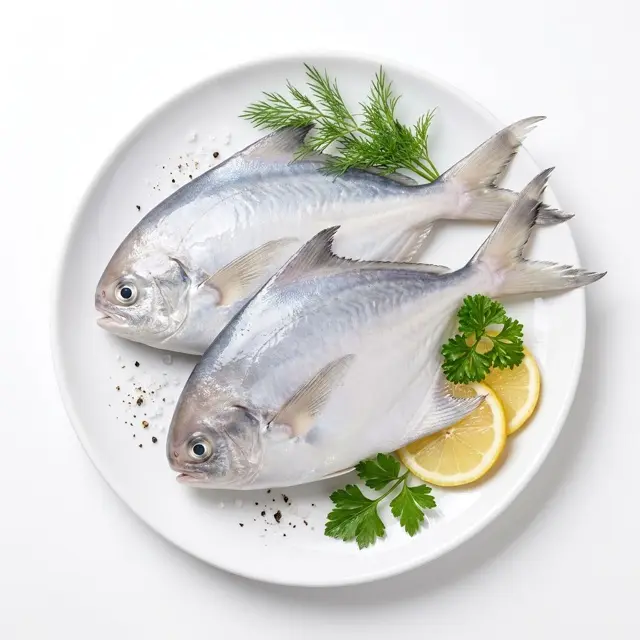
Pomfret is the classic choice. Its flesh is mild, white and soft, and it has one central bone and very few small ones. Choose large silver pomfret of about 450 to 500 g each. Small pomfret are better for a tawa fry; in a parcel they cook too fast and dry out.
| Fish | Marathi | Cut to ask for | Steaming time |
|---|---|---|---|
| Pomfret (silver, white) | पापलेट (paplet) | Each fish into 4 thick pieces across the bone, or 2 fillets | 15 min pieces, 12 min fillets |
| Rawas (Indian salmon) | रावस | Boneless fillets, 2.5 cm thick | 12 to 14 min |
| Bhetki (barramundi) | भेटकी | Boneless fillets, 2.5 cm thick | 12 to 14 min |
| Surmai (kingfish) | सुरमई | Steaks 2 cm thick | 12 to 14 min |
Ask your seller to scale the pomfret, remove the fins, gut it and cut it into thick pieces across the bone. If you have children at the table, ask for boneless fillets instead. Our guide on how to clean pomfret shows each step if you are doing it at home.
Fresh pomfret has bright, clear eyes, red gills, shiny skin and firm flesh that springs back. Check today’s fish prices in Thane to see what is in good supply.
How to fold a banana leaf parcel
The fold is easier than it looks. The trick is a soft leaf.
- Cut the leaf. Cut squares of about 25 cm, avoiding the thick central rib. You need 8 squares for 8 pieces.
- Soften it. Pass each square over a low flame for a few seconds, both sides. It turns a darker, glossy green and stops cracking. Hot water works too.
- Place the fish. Put a chutney-coated piece in the middle, on the shiny side of the leaf.
- Fold the long sides. Bring one side over the fish, then the other, overlapping.
- Tuck the ends. Fold the two short ends underneath so the parcel rests on them.
- Tie it. Use kitchen string, a strip of leaf or a toothpick. Parsi homes often tie it with a thread, which you cut at the table.
If a leaf tears, wrap a second one around it. Steam can escape through a tear and the chutney will run.
Steaming time and doneness
Get the water to a rolling boil before the parcels go in. Then steam on medium high with a tight lid.
- Pieces about 2.5 cm thick, on the bone: 15 minutes
- Boneless fillets: about 12 minutes
- Two layers in the steamer: add 3 to 4 minutes and swap the layers halfway
Open one parcel to check. The flesh should be white and opaque and lift easily off the bone.
US FDA advice is to cook most seafood to an internal temperature of 145°F (63°C). If you have a probe thermometer, check the thickest part next to the bone. If the fish still looks glassy, rewrap it and steam 2 to 3 minutes more.
No steamer? Use an idli pot. Or put a steel stand in a large kadhai with 4 to 5 cm of water, and a flat plate on top. A pressure cooker works with the vent weight removed, so it acts as a steamer.
Why steaming is a light way to cook fish
Steaming needs no oil, apart from a drop on the leaf if you like. The fish cooks gently in moist heat, so it stays tender.
ICMR-NIN’s Dietary Guidelines for Indians 2024 suggest sautéing, steaming, grilling, boiling or baking in place of frying for everyday cooking. They also suggest steam cooking over deep frying. Patra ni machhi fits that advice neatly.
The fish itself brings a lot. Per 100 g raw, IFCT 2017 lists white pomfret at 19.02 g protein and 5.12 g fat. It also has 0.59 g of EPA and DHA, the omega-3 fats found in fish. The coconut in the chutney adds some fat, mostly saturated, so keep the chutney coat generous but not heaped.
For a side by side look at frying methods, read is fried fish healthy? And for a lighter fish plan, see best fish for weight loss in India.
This is general food information, not medical advice. If you follow a diet for a health condition, ask your doctor or dietitian.
Tips and troubleshooting
- Chutney too runny: you added too much water or lemon. Grind in a little more coconut. A runny chutney slides off in the steamer.
- Chutney tastes flat: add a pinch more sugar and a squeeze of lemon. It should taste a little too strong on its own.
- Chutney turned dark: it was ground too long and got warm. Grind in short bursts, and add the lemon at the end.
- Fish dry: the pieces were too thin or steamed too long. Ask for thick cuts and check at 12 minutes.
- Water in the parcel: the lid dripped onto the fish or the water touched the parcels. Keep the water level low and the lid tight.
- Make ahead: grind the chutney the night before and keep it in the fridge. Wrap the parcels up to 2 hours ahead and keep them chilled. Add 2 minutes to the steaming time.
What to serve with patra ni machhi
Serve it as the Parsis do, as one dish in a spread. Pair it with plain rice and a yellow Parsi style dal, plus a kachumber salad.
It also works as a light main with a bowl of rice and lemon wedges. For a mixed Sunday table, add an air fryer fish fry or a bowl of kolambi curry.
Order large pomfret cut into thick pieces or fillets from verified sellers in Thane, delivered across Thane and Mulund.
What to do next: see today’s pomfret from verified sellers and ask for 2 large fish cut into thick pieces across the bone.
Related reading
- Healthiest Way to Cook Fish: Steam, Grill or Curry?
- Pomfret Fish Benefits: White vs Black Pomfret Nutrition
You might also like
Sources
- US Food and Drug Administration. Selecting and Serving Fresh and Frozen Seafood Safely. fda.gov. Safe internal temperature of 145°F for most seafood.
- ICMR-National Institute of Nutrition. Dietary Guidelines for Indians 2024. PDF at nin.res.in. Guideline 7: cooking methods in place of frying (page 51). Guideline 13: steam cooking in place of deep frying (page 88).
- Longvah T, Ananthan R, Bhaskarachary K, Venkaiah K. Indian Food Composition Tables 2017 (IFCT 2017). ICMR-NIN, Hyderabad. PDF at nin.res.in. Table 1 (protein, fat) and Table 7 (EPA, DHA): Pomfret white P057.
Patra Ni Machhi (Parsi Steamed Pomfret in Banana Leaf)
Ingredients
Method
- Salt the fish. Rinse the pomfret pieces, pat dry and rub with 3/4 tsp salt and 1 tbsp lemon juice. Rest 15 minutes while you make the chutney.
- Grind the chutney. Grind the coconut, coriander, mint, green chillies, garlic, cumin, sugar, 2 tbsp lemon juice and salt to a thick, fairly smooth paste. Add water a spoon at a time only if the blades stick. Taste: it should be clearly sweet, sour and hot.
- Soften the banana leaf. Wipe the leaf squares clean. Pass each one over a low gas flame for a few seconds, or dip in hot water, until it turns glossy and bends without tearing.
- Coat the fish. Spread a thick layer of chutney all over each piece, about 2 tbsp per piece, pushing some into any cuts.
- Wrap the parcels. Brush the centre of a leaf with a drop of oil if using. Place a piece in the middle, fold the two long sides over it, then fold the two short ends under. Tie with string or pin with a toothpick. Wrap each parcel in a second leaf if the first one tears.
- Set up the steamer. Bring 4 to 5 cm of water to a rolling boil in a steamer, idli pot or large kadhai with a rack. The water must not touch the parcels.
- Steam. Lay the parcels in one layer, seam side down. Cover tightly and steam on medium high for 15 minutes for pieces about 2.5 cm thick, or 12 minutes for fillets.
- Check doneness. Open one parcel. The flesh should be white and opaque and lift easily off the bone, or read 63°C (145°F) in the thickest part. If it is still glassy, rewrap and steam 2 to 3 minutes more.
- Serve. Rest 2 minutes, then serve the parcels closed on the plate so each person opens their own. Add lemon wedges on the side.
Frequently asked questions
What is patra ni machhi?
Patra ni machhi is a Parsi dish of fish, usually pomfret, coated in a sweet, sour and hot coconut green chutney, wrapped in banana leaf and steamed. 'Patra' refers to the leaf wrap and 'machhi' means fish. It is a classic of Parsi wedding and festive meals, often served alongside other dishes as a parcel that each guest opens at the table.
Which fish is best for patra ni machhi?
Pomfret is the traditional fish. Large silver pomfret of about 450 to 500 g, cut into thick pieces or fillets, gives a soft, mild flesh that suits the chutney. Rawas and bhetki fillets also work well, because they are thick, white and hold together when steamed. Avoid very soft fish like bombil, which turns mushy in a parcel.
How long do you steam patra ni machhi?
Steam pieces about 2.5 cm thick for 15 minutes on medium high, once the water is at a rolling boil. Boneless fillets need about 12 minutes. Open one parcel to check: the flesh should be opaque and lift off the bone, or read 63°C in the thickest part. Steam 2 to 3 minutes more if it still looks glassy.
Can I make patra ni machhi without banana leaves?
Yes. Use baking paper folded into tight parcels, or foil with a layer of baking paper inside so the lemon in the chutney does not touch the foil. The fish cooks the same way. You lose the light, grassy aroma the banana leaf adds, so use leaves when you can find them at the vegetable market.
Is steamed fish healthier than fried fish?
Steaming adds little or no oil, so it is a lighter way to cook fish than frying. ICMR-NIN's Dietary Guidelines for Indians 2024 suggest steaming, grilling, sautéing, boiling or baking in place of frying for everyday cooking, and steam cooking in place of deep frying. This is general information, not medical advice.
Can I make patra ni machhi in a pressure cooker or idli pot?
An idli pot works very well: put the parcels on the idli plates or a flat steel plate on the stand. A pressure cooker also works if you steam without the whistle, with the vent weight removed, for the same 15 minutes. Do not pressure cook with the whistle on, because the fish will overcook and turn dry.
How we write and check these guides: editorial standards
Share this article: