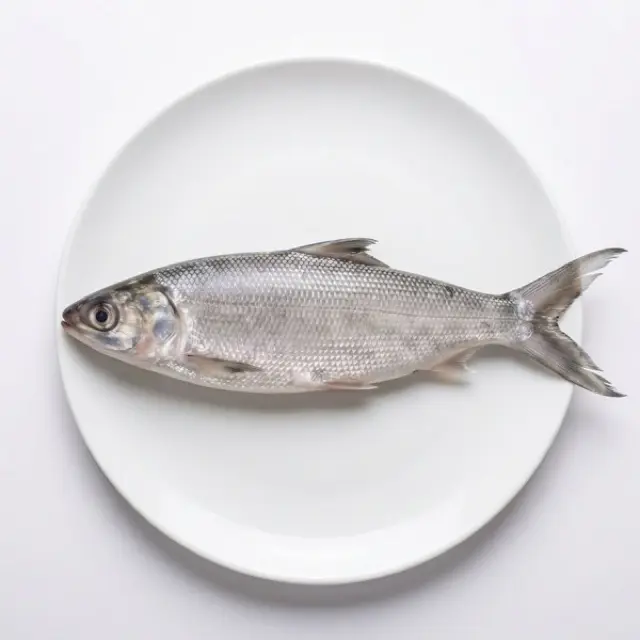
Fish in this guide: PomfretSole FishBhetki (Barramundi)Rawas (Indian Salmon)Prawns Today's prices →
Fish for Elderly Parents: Soft, Safe and Full of Goodness
The best fish for elderly parents is soft, mild and low in bones: pomfret (paplet), halwa (black pomfret), sole (lep), boneless bhetki or basa fillets and rawas steaks. Cook them soft, with less salt.
Quick answer
- Pick soft, low-bone fish: pomfret, halwa, sole, bhetki fillets, rawas steaks, bombil and prawns.
- Skip bony rohu, katla and hilsa unless filleted and checked.
- Steam, or cook a light curry or khichdi. Keep salt and chilli low.
- Fish gives good protein, vitamin B12 and some vitamin D, which older people often need more of.
- Flake every piece by hand before serving, and let them eat sitting upright.
ICMR-NIN says people over 60 need fewer calories but more nutrients. Fish brings these in a form that is easy to chew. The main risk is bones, and a few simple habits take care of that.
Every number below comes from a source listed under Sources. Fish values are per 100 g raw edible portion.
This is general food information, not medical advice. If your parent has kidney disease, diabetes, swallowing trouble, a heart condition or takes blood thinners, ask their doctor before changing their diet.
What changes in an older parent’s diet?
ICMR-NIN’s Dietary Guidelines for Indians (2024) have a full guideline for people aged 60 and over. The key points:
- Less energy, more nutrients. The body slows after 60. Older people need fewer calories but more vitamins and minerals, from vegetables, fruits, beans, nuts, eggs and fish.
- Appetite drops. Taste and smell change with age. So every bite needs to count.
- The body changes. Digestion slows and protein is used less well. Bones thin. Muscle loss (sarcopenia) can set in.
- Food should be soft. ICMR-NIN advises well cooked, soft food with less salt and mild spices.
- Water matters. It suggests about two litres a day to avoid dehydration and constipation.
Fish fits this advice well. It is soft when cooked, easy to digest for most people, and rich in protein.
How much protein does an elderly parent need?
ICMR-NIN puts the protein need at 0.83 g per kg of body weight a day. Its sample diets for the elderly give:
| Reference person (over 60) | Protein a day in ICMR-NIN’s sample diet |
|---|---|
| Woman, 55 kg | about 56 g |
| Man, 65 kg | about 62 g |
ICMR-NIN says some dal can be swapped for egg, fish or meat. Adding milk, fish or egg to a meal improves its protein quality.
How much does fish give? From IFCT 2017 (ICMR-NIN):
| Fish (Marathi name) | Protein (g per 100 g raw) | Texture for elders |
|---|---|---|
| Surmai (सुरमई) | 22.28 | Firm steak, one central bone |
| Sole (लेप, lep) | 19.05 | Very soft, thin flat fish |
| Pomfret (पापलेट, white) | 19.02 | Soft, mild, one spine |
| Halwa (हलवा, black pomfret) | 18.91 | Soft, holds shape in curry |
| Bhetki (भेटकी) | 15.28 | Mild white flakes, buy as fillet |
| Prawns (कोळंबी, tiger) | 14.25 | No bones, chop small |
| Bombil (बोंबील) | 13.53 | Very soft, almost melts |
So 100 g of pomfret gives about a third of a 55 kg woman’s daily protein (19 g of 56 g). For more, see our fish protein guide.
One caution. If your parent has kidney disease, protein needs can be different. Ask their kidney doctor before adding more protein.
Which soft, low-bone fish suit older parents?
| Fish | Why it suits elders | Ask the seller for |
|---|---|---|
| Pomfret (पापलेट) | Soft, mild, one central spine that lifts out whole | Cleaned whole, or curry pieces |
| Halwa (हलवा) | Soft, few bones, does not break in gravy | Thick curry slices |
| Sole (लेप) | Thin and tender, flesh lifts off the bone easily | Cleaned, skin removed |
| Bhetki (भेटकी) | Mild white flakes, no bones in fillets | Boneless fillets |
| Basa (बासा) | Very soft, very mild | Boneless fillets |
| Rawas (रावस) | Mild, flaky, one bone per steak | Steaks |
| Bombil (बोंबील) | Extremely soft | Cleaned, head and fins off |
| Prawns (कोळंबी) | No bones | Cleaned, deveined, small size |
Fish to skip or handle with care: rohu, katla and hilsa carry many fine, forked bones that hide in curry. Bangda and tarli have fine bones too. Tarli and hilsa are rich in vitamin D, so if you serve them, debone carefully after cooking.
Why do vitamin B12 and vitamin D matter after 60?
Vitamin B12. NIH says older adults are more likely to run low. Atrophic gastritis (a thinning of the stomach lining) affects 8% to 9% of adults aged 65 and over. It cuts B12 uptake from food. Metformin, a common diabetes medicine, and acidity medicines can lower B12 too. Low B12 can cause tiredness, anaemia and numb hands and feet.
Seafood is one of the richest sources. NIH lists 17 µg of B12 in 3 ounces of cooked clams, against an adult need of 2.4 µg. Sardines and mackerel are also rich. Our vitamin B12 fish guide has the full chart.
Vitamin D. NIH raises the daily need from 15 µg to 20 µg (800 IU) after age 70. Older people also make less vitamin D from sunlight. In IFCT 2017, vitamin D3 per 100 g is 4.96 µg in hilsa, 3.51 µg in tarli, 2.28 µg in halwa and 0.61 µg in white pomfret. See our vitamin D rich fish chart.
Food alone may not cover either vitamin for some elders. Ask the doctor whether a blood test is worth doing.
How do I serve fish to an elderly parent without bone worries?
Swallowing trouble is more common in older adults, says MedlinePlus (US National Library of Medicine). It often follows a stroke or Parkinson’s disease. For such a parent, a fish bone is a bigger risk.
Follow these steps every time:
- Buy the right cut. Fillets, steaks or pomfret. On Relifish you can choose how the seller cleans and cuts your fish.
- Check before cooking. Run a fingertip along each fillet. Pull pin bones out with clean tweezers.
- Cook, then lift the spine. For pomfret or halwa, slide a knife along the backbone and lift it out in one piece.
- Flake by hand. Break cooked fish with your fingers. You will feel any bone your eyes missed.
- Mix into soft food. Fish flakes stirred into rice, dal or khichdi are easier to swallow.
- Serve small pieces, sitting upright. Let them eat slowly. Stay nearby.
- Watch for warning signs. Coughing, choking or food sticking while eating needs a doctor’s check. MedlinePlus says a speech therapist and diet changes can help.
Our guide on how to clean pomfret shows the deboning method step by step.
What soft fish dishes do elders enjoy?
ICMR-NIN notes that cooking softens food and makes it easy to chew. It suggests steaming, grilling or light sautéing in place of frying. These work well:
- Steamed fish with ginger. Steam bhetki or pomfret for a few minutes. Flake into rice with a little ghee or coconut milk.
- Light kalvan or curry. Pomfret or halwa in a thin kokum or coconut gravy, with mild spice. Our pomfret curry recipe works with less chilli.
- Fish khichdi. Add deboned fish flakes to moong dal khichdi in the last five minutes.
- Fish cutlets. Mash cooked, deboned fish with boiled potato and coriander. Shallow-fry or bake.
- Bombil curry. Bombil turns almost creamy in a light gravy. Remove the central bone before serving.
- Prawn and vegetable stew. Chop prawns small. Overcooked prawns turn rubbery, so add them last.
Keep salt low. ICMR-NIN advises less salt for the elderly. Go easy on dried fish like sukha bombil, which is usually salty.
What does a fish week look like for an older parent?
| Day | Lunch idea | Why |
|---|---|---|
| Monday | Pomfret curry, soft rice, lauki bhaji | Protein, soft, few bones |
| Wednesday | Steamed bhetki flakes in moong khichdi | Easy to chew and swallow |
| Friday | Prawn and pumpkin stew, chapati soaked in dal | B12, no bones |
| Sunday | Halwa kalvan with kokum | Protein, vitamin D, family meal |
ICMR-NIN also suggests 200 to 400 ml of low-fat milk or milk products a day for the elderly. It advises activities for strength and balance on three or more days a week. Food and movement work together.
Getting soft, low-bone fish in Thane
Verified sellers on Relifish list pomfret, halwa, sole, bhetki, rawas and prawns when they have them. Ask for fillets, steaks or curry pieces, so less work is left for home. For two elders, one medium pomfret or 250 g to 300 g of fillets is usually enough for a meal. Order for today or pre-order for a later day, and pick a 2-hour delivery slot in Thane or nearby Mulund.
Check freshness when it arrives: bright eyes, red gills, firm flesh and a clean sea smell. Fish for elders should be cooked the same day or frozen. See how to store fish at home.
You might also like: diet after fever recovery, fish for brain health, fish for joint pain and fish for women over 40.
What to do next: see today’s pomfret or bhetki, check today’s fish prices, or order from the shop.
Sources
- ICMR-NIN. Dietary Guidelines for Indians 2024, guideline 16 (elderly) and pages 58, 66, 83 and 105. PDF at nin.res.in.
- ICMR-NIN. Indian Food Composition Tables 2017, Tables 1 and 3. PDF at nin.res.in.
- NIH Office of Dietary Supplements. Vitamin B12 fact sheet.
- NIH Office of Dietary Supplements. Vitamin D fact sheet.
- MedlinePlus, US National Library of Medicine. Swallowing disorders.
Frequently asked questions
Which fish is best for elderly people?
Soft, mild fish with few bones suit older people best. Pomfret, halwa, sole (lep), boneless bhetki or basa fillets and rawas steaks are easy to chew and easy to debone. Prawns have no bones but should be chopped. ICMR-NIN advises well cooked, soft food with less salt and moderate spice for the elderly. Avoid bony rohu, katla and hilsa unless filleted.
How much protein does an elderly person need?
ICMR-NIN puts adult protein needs at 0.83 g per kg of body weight a day. Its sample diet for a 55 kg woman over 60 gives about 56 g protein a day, and for a 65 kg man about 62 g. It says ageing affects protein use, and fish, milk, pulses or egg improve protein quality. Ask your doctor if your parent has kidney disease.
Is fish good for old people's bones and muscles?
Fish can be part of it. ICMR-NIN says ageing brings decreased bone density and a risk of muscle wasting, called sarcopenia. Fish gives good-quality protein, and some fish, like tarli and hilsa, also give vitamin D. ICMR-NIN adds that strength and balance exercise three days a week matters for the elderly too.
Why do older adults need more vitamin B12?
Older adults often absorb less B12 from food. NIH says atrophic gastritis, which affects 8% to 9% of adults aged 65 and over, reduces B12 absorption. Metformin and acid-reducing medicines can also lower B12. Fish and shellfish, especially clams and sardines, are rich sources. Ask the doctor whether a B12 test makes sense for your parent.
How do I stop an elderly parent choking on fish bones?
Buy low-bone cuts like fillets, steaks or pomfret, and feel every piece with your fingers before serving. Flake the fish and mix it into rice, dal or khichdi so any bone shows up. Serve small pieces and let them eat slowly, sitting upright. If your parent coughs or chokes often while eating, see a doctor, since swallowing trouble is more common in older adults.
How we write and check these guides: editorial standards
Share this article: