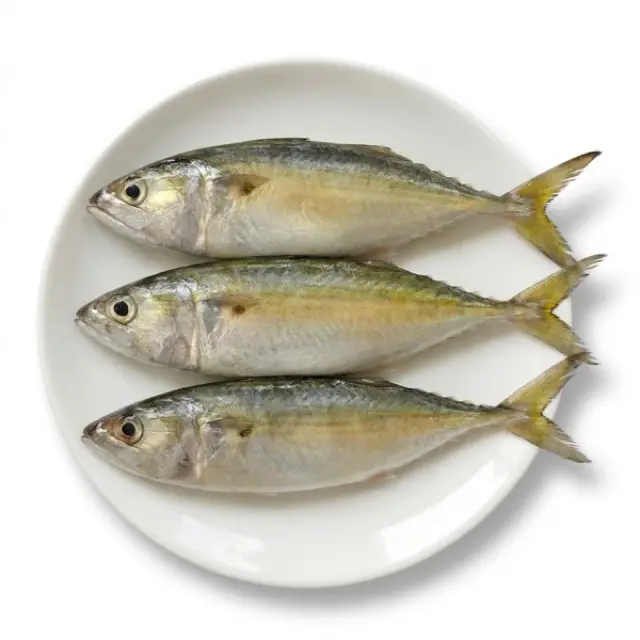
Fish in this guide: Surmai (Kingfish)SardineHalwa (Black Pomfret)PomfretHilsa Today's prices →
Fish for Joint Pain: What Omega-3 Can and Cannot Do for Arthritis
Oily fish can be a useful part of the diet for joint pain, mainly in rheumatoid arthritis. NIH’s National Center for Complementary and Integrative Health (NCCIH) says omega-3 rich diets may improve pain and swollen, tender joints. It says they might be a suitable addition to medicine.
The evidence is mixed, though, and fish is not a treatment on its own. In Mumbai and Thane, the best omega-3 picks are surmai, halwa, tarli and pomfret.
Quick answer
- Omega-3 from oily fish may ease rheumatoid arthritis symptoms, as an add-on to medicine.
- We found no NIH support for fish easing osteoarthritis (wear-and-tear) knee pain.
- Best Indian picks: surmai, halwa, tarli and paplet. Palva and tarli add vitamin D.
- Aim for two to three oily fish meals a week, grilled, steamed or in a light curry.
- Ask your doctor before fish oil capsules, especially if you take blood thinners.
This guide is honest about what the research shows, and what it does not.
This is general food information, not medical advice. Do you have arthritis, take blood thinners or other regular medicines, or have a fish allergy? Then check with your doctor before changing your diet or taking supplements. Never stop prescribed arthritis medicine on your own.
Two kinds of joint pain, two different stories
“Arthritis” covers many conditions. The two most common behave very differently.
| Rheumatoid arthritis (RA) | Osteoarthritis (OA) | |
|---|---|---|
| What it is | An autoimmune disease: the immune system attacks the joint lining (NCCIH) | A degenerative disease: joint tissues break down over time (NIAMS) |
| Typical pattern | Pain, swelling and stiffness, often in several joints | Pain on use, short stiffness after rest; knees, hips, hands, spine |
| Who | More common in women, often starts in middle age (NCCIH) | More common with age; women more often, especially after 50 (NIAMS) |
| Omega-3 evidence we found | Several reviews and trials, with mixed results | We did not find support in the NIH sources we read |
So when someone says “fish is good for joints”, here is the fair version. There is some evidence for rheumatoid arthritis symptoms, as an add-on to medicine.
What the research actually says
NIH Office of Dietary Supplements (ODS)
ODS reviews the omega-3 trials in its fact sheet for health professionals. Its summary:
- Trials, many from the 1990s, generally found omega-3 supplements reduced patients’ use of anti-inflammatory drugs and steroids.
- But they did not have consistent effects on painful or tender joints, swelling or morning stiffness.
- Reviews disagree. Some found no clear effect on symptoms but less need for painkillers. Others found less swelling, pain and stiffness.
- The bottom line from ODS: omega-3s may help as an add-on to medicine for RA symptoms. More research is needed to confirm this.
Note that these trials used capsules at high doses. For example, one Danish trial gave 2.0 g EPA plus 1.2 g DHA a day. That is far more than a normal fish meal provides.
NCCIH (part of NIH)
NCCIH’s omega-3 page cites two reviews:
- 2022 review, 30 studies, 1,420 people. Foods rich in polyunsaturated fats, especially omega-3s, may improve pain and swollen, tender joints.
- 2021 review, 12 studies, 776 people. Omega-3 rich diets gave lower pain than ordinary diets. The authors rated the evidence as low.
NCCIH’s RA fact sheet adds a 2017 review of 22 studies (956 people). It found long-chain omega-3 supplements had a good effect on pain in RA. It also reminds readers that conventional medical treatment can slow joint damage.
What this means for your plate
Fish will not replace your rheumatologist’s medicines. But a diet with regular oily fish is reasonable, low-risk for most people, and also good for the heart. The Arthritis Foundation points out that arthritis and heart disease often coexist.
Which Indian fish have the most omega-3?
EPA and DHA are the long-chain omega-3 fats studied for joints. Per 100 g raw edible portion, from India’s food composition tables (IFCT 2017, ICMR-NIN):
| Fish (Marathi name) | Omega-3 EPA + DHA (g) | Vitamin D activity (µg) |
|---|---|---|
| Surmai (kingfish) | 1.05 | 1.9 |
| Halwa (black pomfret) | 0.81 | 5.6 |
| Tarli (oil sardine) | 0.61 | 3.5 or more |
| Pomfret (paplet, white pomfret) | 0.59 | 1.1 |
| Bangda (Indian mackerel) | 0.33 | 1.4 |
| Rohu | 0.07 | 1.7 |
| Hilsa (palva) | not in our omega-3 table | 10.1 |
Vitamin D activity is our sum of IFCT’s D3 plus five times its 25-OH-D3, the method IFCT itself uses. See our vitamin D fish guide for the full chart and our omega-3 fish guide for eleven fish ranked.
The Arthritis Foundation lists salmon, tuna, sardines and mackerel as the best sources of marine omega-3s. Tarli is our everyday Indian sardine.
Why vitamin D belongs in this conversation
Vitamin D is about bones and muscles, not inflammation cures. NIH ODS says vitamin D helps the body absorb calcium, one of the main building blocks of bone. In adults, a deficiency causes osteomalacia, which brings bone pain and muscle weakness. ODS also notes that a shortage of vitamin D may lead to weak, painful muscles.
So if your “joint pain” is partly bone or muscle pain, low vitamin D is worth checking. Only a blood test can tell you. The adult RDA used by NIH is 15 µg (600 IU) a day up to age 70, and 20 µg (800 IU) after that. Halwa, tarli and hilsa help. So does real sunlight. For women, our bone health guide for women over 40 goes deeper.
A weekly fatty fish plan for joint health
The Arthritis Foundation suggests a 3 to 6 ounce serving (about 85 to 170 g) of fatty fish two to four times a week. ICMR-NIN’s Dietary Guidelines for Indians (2024) suggest about 200 g of marine fish a week for omega-3 fats. Here is a plan that sits comfortably inside both.
| Day | Fish | How to cook | Why |
|---|---|---|---|
| Monday | Tarli | Light tawa fry, thin masala, little oil | Omega-3 plus vitamin D |
| Wednesday | Surmai | Grilled slice or light curry | Highest omega-3 in IFCT |
| Saturday | Halwa or pomfret | Steamed or kokum curry | Omega-3, and halwa adds vitamin D |
| Optional | Hilsa, when available | Mustard or light curry | Highest vitamin D in IFCT |
How to cook to keep the benefit
- Grill, steam or make a light curry. ICMR-NIN suggests grilling, baking, steaming or sautéing with minimal oil instead of frying.
- Keep some fat in the dish. ICMR-NIN notes fats help the body absorb fat-soluble vitamins like vitamin D. A teaspoon of oil is enough.
- Skip the thick rava coat. It soaks up oil and adds nothing for your joints.
- Watch your weight. NIAMS lists being overweight among the risk factors for osteoarthritis. Fish in place of a fatty meat dish helps.
- Swap, don’t add. Let fish replace a heavier dish rather than sit beside it.
Fish meals or fish oil capsules?
The trials above mostly used capsules, at doses no meal can match. That does not mean you should self-prescribe them.
- Bleeding and blood thinners. NIH ODS says fish oil can have antiplatelet effects at high doses, and might prolong clotting time in people on warfarin. NCCIH advises talking to your doctor before omega-3 supplements if you take medicine that affects clotting or are allergic to fish or shellfish.
- Food brings more. The Arthritis Foundation notes that eating fish also gives calcium, vitamin D and selenium, which a capsule does not.
- Beware “joint” supplements. NCCIH says the US FDA has warned about arthritis pain supplements tainted with hidden prescription drugs.
Our real fish vs fish oil guide compares the two in more detail.
Mercury: choose smaller fish
The Arthritis Foundation advises choosing smaller fish, which carry less mercury. Tarli and prawns are on the US FDA’s lowest-mercury list. Shark is on its avoid list. Surmai is not on the FDA chart, but its close relative king mackerel is on the avoid list, so rotate it with smaller fish. Our low-mercury fish guide has the details.
Buying tips in Thane and Mumbai
- Tarli is small and bony. Ask the seller to scale and gut it for fry.
- Surmai is best bought as steaks for grilling.
- Halwa is darker and firmer than white pomfret, and holds up well in curry.
- Fresh oily fish has bright eyes, red gills and firm flesh. Oily fish spoils faster, so cook it the same day.
- Prices change daily with the catch. Check today’s fish prices before you plan your week.
Getting omega-3 rich fish in Thane
Verified sellers on Relifish list surmai, tarli, halwa, pomfret and bangda when they have them. Choose how each fish is cleaned and cut. Order for today or pre-order for a later day, with a 2-hour delivery slot in Thane, Mulund or Bhandup.
For a family of four, ask for four surmai steaks, one large halwa cut into slices, or a plate of tarli for each person. Soft, boneless slices of surmai or halwa also suit older parents with stiff hands. Our fish with less bones guide has more easy picks.
What to do next: check today’s fish prices, then order surmai or tarli from the shop for your first oily fish meal of the week.
Related reading
- Fish for Elderly Parents: Soft, Low-Bone Picks and Recipes
- How Much Fish Should I Eat Per Week? India Guide
Sources
- National Institutes of Health, Office of Dietary Supplements. Omega-3 Fatty Acids: Fact Sheet for Health Professionals. Rheumatoid arthritis section; warfarin and bleeding.
- National Center for Complementary and Integrative Health (NIH). Omega-3 Supplements: What You Need To Know. 2022 and 2021 reviews on RA.
- NCCIH. Rheumatoid Arthritis: In Depth. 2017 review of 22 studies, safety, tainted supplements, what RA is.
- National Institute of Arthritis and Musculoskeletal and Skin Diseases (NIAMS). Osteoarthritis. Definition, who gets it, risk factors.
- Arthritis Foundation. Best Fish for Arthritis. Serving size and frequency, smaller fish for mercury, fish vs supplements.
- NIH Office of Dietary Supplements. Vitamin D: Fact Sheet for Consumers. Calcium absorption, osteomalacia, muscle weakness, RDAs.
- Longvah T, Ananthan R, Bhaskarachary K, Venkaiah K. Indian Food Composition Tables 2017 (IFCT 2017). ICMR-National Institute of Nutrition, Hyderabad. PDF at nin.res.in. Table 7 (EPA, DHA) and Table 3 (vitamin D3, 25-OH-D3): Vanjaram P087, Pomfret black P055, Sardine P071, Pomfret white P057, Mackerel P034, Rohu S006, Hilsa P017.
- ICMR-National Institute of Nutrition. Dietary Guidelines for Indians 2024. PDF at nin.res.in. Marine fish about 200 g a week (page 56), cooking methods (page 66), fats and fat-soluble vitamins.
- US Food and Drug Administration. Advice about Eating Fish. Best Choices and Choices to Avoid lists.
Frequently asked questions
Is fish good for joint pain?
Oily fish can be a helpful part of the diet, mainly for rheumatoid arthritis. NIH's National Center for Complementary and Integrative Health says reviews found omega-3 rich diets may improve pain and swollen, tender joints, and might be an appropriate addition to drug therapy. The evidence is mixed and not a replacement for treatment. Do not change prescribed medicines without your doctor.
Which fish is best for arthritis in India?
Pick the oily sea fish with the most omega-3. In India's food tables (IFCT 2017), surmai has 1.05 g of EPA plus DHA per 100 g, halwa 0.81 g, tarli 0.61 g and white pomfret 0.59 g. Hilsa, halwa and tarli also bring vitamin D. Rotate them through the week and cook with little oil.
Does fish help osteoarthritis knee pain?
The NIH sources we read discuss omega-3 mainly for rheumatoid arthritis, not osteoarthritis, so we cannot say fish eases osteoarthritis pain. NIAMS lists being overweight among the factors that make osteoarthritis more likely. A fish meal cooked with little oil can help a weight-conscious diet, but knee pain needs a doctor or physiotherapist's plan.
How many times a week should I eat fish for arthritis?
The Arthritis Foundation suggests a 3 to 6 ounce serving of fatty fish two to four times a week for lowering inflammation and protecting the heart. In grams, that is roughly 85 to 170 g a serving. ICMR-NIN suggests about 200 g of marine fish a week for omega-3 fats. Two to three oily fish meals a week fits both.
Should I take fish oil capsules for joint pain?
Ask your doctor first. NIH's Office of Dietary Supplements says trials of fish oil in rheumatoid arthritis often reduced the need for painkillers but had inconsistent effects on pain, swelling and stiffness. Fish oil can interact with blood thinners like warfarin. The Arthritis Foundation notes that eating fish also gives vitamin D, calcium and selenium that capsules do not.
How we write and check these guides: editorial standards
Share this article: