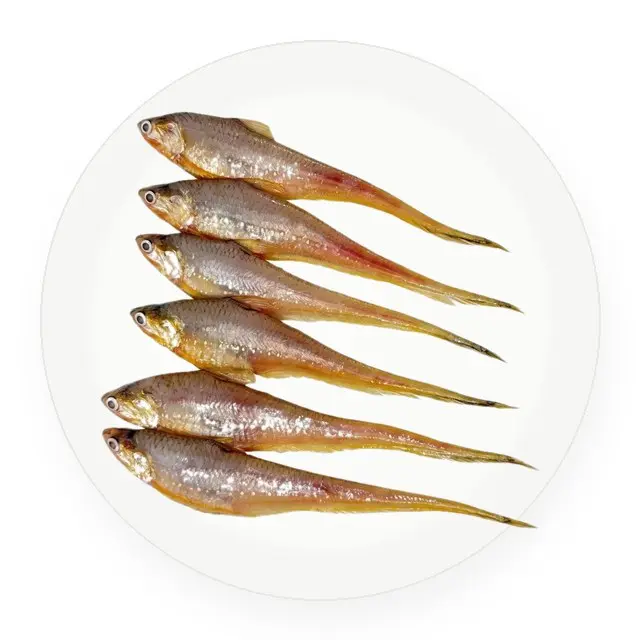
Fish in this guide: Bombil (Bombay Duck)SardineCrabMandeliBangda (Mackerel) Today's prices →
Fish for Women Over 40: Bones, Heart and Protein
Good fish for women over 40 bring calcium, vitamin D, protein and omega-3 together. Think bombil, crab, tarli (sardine), small whole fish like mandeli, and oily fish such as halwa and pomfret.
The US NIH says women lose about 1% of their bone density a year after menopause. Calcium, vitamin D and protein all matter more from this age. Fish can supply some of each.
Quick answer
- Calcium: crab, bombil and small fish eaten with soft bones (mandeli, tarli) give the most.
- Vitamin D: palva (hilsa) and tarli lead among Indian fish. Sunlight still matters most.
- Protein: bangda, pomfret and surmai give about 19 to 22 g per 100 g.
- Heart: surmai, halwa, tarli and pomfret are richest in omega-3.
- Plan one calcium fish meal and one oily fish meal a week, plus daily milk or curd.
Every number below comes from a source listed under Sources. Fish values are per 100 g raw edible portion unless stated.
This is general food information, not medical advice. If you have osteoporosis, a heart condition or take any medicine, ask your doctor before changing your diet.
What changes for women after 40?
The years around menopause change how the body handles calcium. The NIH Office of Dietary Supplements explains it simply:
- Falling estrogen at menopause reduces calcium absorption and increases calcium loss from bone.
- Bone loss is fastest during menopause and for about 5 years after.
- On average, women lose about 1% of bone mineral density a year after menopause.
ICMR-NIN’s Dietary Guidelines for Indians (2024) add two points. Women are at higher risk of becoming overweight after menopause (page 64). And older adults face decreased bone density, so they need more micronutrient-rich foods such as vegetables, fruits, beans, nuts, eggs and fish (page 100).
This is why food choices from the 40s onwards are worth a little thought.
How much calcium and vitamin D do you need?
These are US values from the NIH, used widely as a reference:
| Age (women) | Calcium a day | Vitamin D a day |
|---|---|---|
| 19 to 50 years | 1,000 mg | 15 µg (600 IU) |
| 51 to 70 years | 1,200 mg | 15 µg (600 IU) |
| Above 70 years | 1,200 mg | 20 µg (800 IU) |
Milk and curd stay the main calcium source for most Indian families. ICMR-NIN calls milk the best source of biologically available calcium. Fish can add to it, especially for women who take little dairy.
Which fish give the most calcium?
Most of the calcium in a fish sits in its bones. A fillet of surmai or pomfret has very little. Fish and shellfish eaten with soft bones or shell parts have much more.
From IFCT 2017 (ICMR-NIN), calcium per 100 g edible portion:
| Fish (Marathi name) | Calcium (mg per 100 g) |
|---|---|
| Sea crab (खेकडा) | 333 |
| Mud crab | 201 |
| Bombil (बोंबील, Bombay duck) | 159 |
| Oyster | 126 |
| Prawns (tiger, कोळंबी) | 71.89 |
| Tarli (तारली, oil sardine) | 42.26 |
| Anchovy (Stolephorus) | 36.60 |
| Bangda (बांगडा) | 31.27 |
| Pomfret (white, पापलेट) | 13.64 |
| Surmai (सुरमई) | 9.85 |
For comparison, the NIH lists canned sardines with bones at 325 mg per 3 ounces (about 85 g). Canned pink salmon with bones has 181 mg. In both, you eat the soft bones.
What about mandeli? Mandeli (मांदेली, golden anchovy) is a small fish that Mumbai homes usually fry whole, bones and all. IFCT 2017 does not list it, so we cannot give you a number. The same idea applies, though: when you eat the soft bones of a small fish, you eat its calcium.
Dried fish. ICMR-NIN’s guidelines give dry fish an average of 1,962.6 mg calcium per 100 g. Fish and sea foods average 323.1 mg (Table 1.5, page 10). Sukha bombil and dried prawns are part of many Konkan kitchens. They are usually salty, so keep portions small if you watch your blood pressure.
Which fish give vitamin D?
The NIH says the flesh of fatty fish, such as trout, salmon, tuna and mackerel, is among the best food sources of vitamin D. Vitamin D helps the body absorb calcium.
From IFCT 2017, vitamin D3 per 100 g:
| Fish | Vitamin D3 (µg per 100 g) |
|---|---|
| Hilsa | 4.96 |
| Tarli (oil sardine) | 3.51 |
| Surmai | 1.57 |
| Bombil | 0.96 |
| Salmon (Atlantic) | 0.86 |
| Pomfret (white) | 0.61 |
| Bangda | 0.22 |
The NIH lists cooked sockeye salmon at 14.2 µg per 3 ounces. That is far above the Indian salmon sample. Fish differ a lot by species, season and sample, so treat these as rough guides.
Food alone rarely covers vitamin D. ICMR-NIN says adequate sunlight exposure is essential to meet vitamin D needs. If you are worried, ask your doctor about a blood test.
Protein to keep muscles and bones strong
ICMR-NIN puts the protein need at 0.83 g per kg of body weight a day. For a 55 kg woman that is about 46 g. ICMR-NIN also notes that ageing brings changes in protein use and a risk of muscle wasting. Its advice for older adults is to include pulses, milk, fish, minced meat or egg to raise protein quality.
Fish makes this easy. In IFCT 2017, bangda has 21.51 g protein per 100 g, pomfret 19.02 g, tarli 17.91 g and bombil 13.53 g. A 100 g piece of bangda gives almost half a day’s protein for a 55 kg woman. See our fish protein guide for a calculator.
Fish for heart health after 40
The American Heart Association recommends 2 servings of fish a week, particularly fatty fish. Omega-3 fats (EPA and DHA) are the reason.
| Fish (IFCT 2017) | EPA + DHA per 100 g |
|---|---|
| Surmai | 1.05 g |
| Halwa (black pomfret) | 0.81 g |
| Tarli | 0.61 g |
| Pomfret (white) | 0.59 g |
Do note how you cook. ICMR-NIN suggests grilling, baking, steaming or sautéing with little oil instead of frying. A kokum curry or a steamed fish is lighter than a deep fry. For more, read omega 3 fish in India and fish for diabetes.
A simple weekly fish plan for women over 40
- One calcium meal. Crab masala, a bombil curry or mandeli fried whole. Try our Malvani crab masala or bombil fry, with less oil.
- One oily fish meal. Tarli, halwa or pomfret curry for omega-3 and vitamin D.
- Dairy every day. Milk, curd or buttermilk.
- Sun and movement. ICMR-NIN notes that regular physical activity helps maintain muscle mass and bone density.
Buying these fish in Thane
Bombil and mandeli are soft and spoil fast, so buy them for the day you cook.
| Fish | Ask for | Freshness check | For a family of four |
|---|---|---|---|
| Bombil | Cleaned, head off, split open for fry | Shiny, not slimy or mushy | Two to three per person |
| Mandeli | Whole, washed (bones stay in) | Silver skin, firm | A small plate per person |
| Crab | Live, cleaned and halved | Heavy for its size, legs move | One medium crab per person |
| Tarli | Scaled, gutted, head off | Firm belly, shiny skin | Two to three per person |
Verified sellers on Relifish list bombil, mandeli, tarli, crab and other fish when they have them. Order for today or pre-order for a later day, and pick a 2-hour delivery slot in Thane or nearby Mulund. Check today’s fish prices, or browse the shop. Not sure of a fish name? See fish names in English and Marathi.
You might also like: fish for breastfeeding mothers and fish for joint pain.
What to do next: check today’s fish prices, then order bombil or crab from the shop for this week’s calcium meal.
Sources
- NIH Office of Dietary Supplements. Calcium: Fact Sheet for Health Professionals. RDAs by age, menopause and bone loss, about 1% bone density loss a year, canned sardines and salmon with bones.
- NIH Office of Dietary Supplements. Vitamin D: Fact Sheet for Health Professionals. RDAs by age, fatty fish as a source, sockeye salmon.
- Longvah T, Ananthan R, Bhaskarachary K, Venkaiah K. Indian Food Composition Tables 2017. ICMR-NIN, Hyderabad. PDF at nin.res.in. Table 1 (protein), Table 3 (vitamin D3), Table 5 (calcium), Table 7 (EPA, DHA). Entries: Bombay duck P007, Sardine P071, Mackerel P034, Pomfret white P057, Pomfret black P055, Vanjaram P087, Hilsa P017, Salmon P068, Anchovy P003, Crab sea Q002, Mud crab Q005, Oyster Q006, Tiger prawns orange Q008.
- ICMR-National Institute of Nutrition. Dietary Guidelines for Indians 2024. PDF at nin.res.in. Table 1.5 (calcium in food groups, page 10), page 15 (milk and calcium, sunlight and vitamin D), page 58 (protein RDA), page 64 (weight after menopause), page 66 (cooking methods), pages 100 to 101 (older adults, bone density, physical activity).
- American Heart Association. Fish and Omega-3 Fatty Acids.
Frequently asked questions
Which fish is best for women over 40?
There is no single best fish, but a mix works well. Bombil and crab are high in calcium in India's food tables (IFCT 2017). Tarli and hilsa have more vitamin D than most fish. Surmai, halwa, pomfret and tarli are richer in omega-3. All of them give good protein. Two fish meals a week, cooked with little oil, is a sensible pattern. Ask your doctor about your own needs.
Which fish has the most calcium?
Among the Mumbai fish in IFCT 2017, sea crab has 333 mg calcium per 100 g, mud crab 201 mg and bombil 159 mg. Most fish fillets are far lower, for example pomfret at 13.64 mg and surmai at 9.85 mg. The US NIH lists canned sardines with bones at 325 mg per 3 ounces, because the soft bones are eaten.
How much calcium does a woman over 50 need?
The US NIH Office of Dietary Supplements lists 1,000 mg a day for women aged 19 to 50, and 1,200 mg a day for women aged 51 and above. These are US values. Milk and curd remain the main sources in most Indian diets, and fish with soft bones can add to them. Ask your doctor before taking any calcium supplement.
Is fish good for bones after menopause?
Fish can be part of a bone-friendly diet, but it is not a treatment for osteoporosis. The NIH explains that falling estrogen at menopause reduces calcium absorption and speeds up bone loss. Some fish supply calcium, many supply vitamin D, and all supply protein. Pair them with milk or curd, sunlight and regular exercise, and ask your doctor about a bone density test.
Which fish has vitamin D?
The NIH says the flesh of fatty fish is among the best food sources of vitamin D. In IFCT 2017, vitamin D3 per 100 g is 4.96 µg in hilsa, 3.51 µg in tarli (oil sardine), 1.57 µg in surmai and 0.96 µg in bombil. The NIH lists cooked sockeye salmon at 14.2 µg per 3 ounces. Values vary a lot between samples and species.
How we write and check these guides: editorial standards
Share this article: