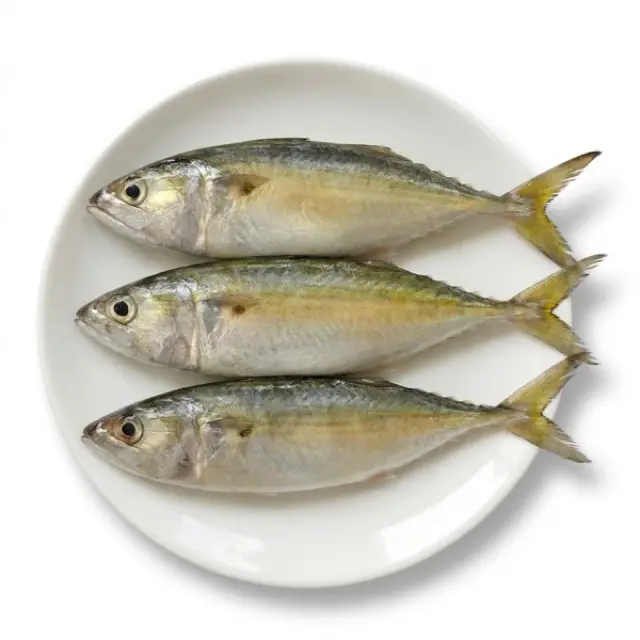
Fish in this guide: Bangda (Mackerel)Tuna (Kupa)ClamCrabSardine Today's prices →
Iron Rich Fish for Anaemia: What Indian Women Should Eat
The most iron rich fish for anaemia in Indian food data are kupa (little tuna), bangda, palla (hilsa), katla and khekda (crab). Each has about 1.1 to 1.6 mg of iron per 100 g. Clams, oysters and most fish are also good sources of vitamin B12, which the body needs to make healthy red blood cells.
Key points
- Fish iron is the heme kind (the type found in animal foods), which the body absorbs better than iron from plants.
- Fish also helps you absorb more iron from the dal and greens on the same plate.
- Tisrya (clams) and kalva (oysters) lead on vitamin B12.
- Add lemon, guava or green chutney to the meal, and keep chai an hour away.
- Fish supports treatment; it does not replace it. Get a blood test first.
Every number in this post comes from a source listed under Sources at the bottom.
This is general information, not medical advice. If you think you have anaemia, or you are pregnant, please see your doctor. Get a blood test before changing your diet or taking supplements.
How common is anaemia in Indian women?
Very common. In India’s National Family Health Survey (NFHS-5, 2019-21), 57.0% of women aged 15 to 49 were anaemic. The figure was 59.1% for adolescent girls aged 15 to 19 and 52.2% for pregnant women. For men aged 15 to 49 it was 25.0%.
In Maharashtra, NFHS-5 found 54.2% of all women aged 15 to 49 anaemic. So this is a real issue in Thane and Mumbai homes too.
The WHO says anaemia can cause tiredness, dizziness, cold hands and feet, headache and shortness of breath. It lists iron deficiency as the most common nutritional cause. Low vitamin B12, folate and vitamin A can also cause it. So can heavy periods, infections and inherited conditions like thalassaemia.
That is why a blood test matters. Food can help with iron and B12 (see our guide to vitamin B12 from fish). It cannot fix a cause that is not about food.
Why does fish help with anaemia?
Fish helps in three ways.
- Heme iron. The US National Institutes of Health (NIH) explains that meat, seafood and poultry contain both heme and non-heme iron. Plants contain only non-heme iron. Heme iron is better absorbed. ICMR-NIN’s Dietary Guidelines for Indians (2024) say the same: iron from plant foods is poorly absorbed, but absorption is good from meat, fish and poultry.
- A boost for your dal and greens. NIH notes that meat, poultry and seafood also increase the absorption of non-heme iron. A piece of fish beside your palak or dal helps you get more out of them.
- Vitamin B12. Vitamin B12 comes naturally only from animal foods. NIH lists megaloblastic anaemia as a hallmark of B12 deficiency. Fish and shellfish are some of the richest sources.
There is also Indian population data. A 2025 study in the British Journal of Nutrition used NFHS-5 data on adults who eat non-vegetarian food. It found that eating fish daily or weekly was linked with a lower risk of anaemia in both men and women. This kind of study shows a link, not proof that fish caused the difference.
Which Indian fish have the most iron?
These values are from the Indian Food Composition Tables 2017 (IFCT 2017, ICMR-NIN). They are per 100 g of raw, edible fish.
| Fish (Marathi / Mumbai name) | Iron (mg per 100 g) | Protein (g per 100 g) |
|---|---|---|
| Kupa (little tuna) | 1.60 | 24.50 |
| Bangda (Indian mackerel) | 1.46 | 21.51 |
| Palla (hilsa) | 1.19 | 21.80 |
| Katla (catla) | 1.14 | 17.94 |
| Khekda (crab) | 1.10 | 10.23 |
| Rohu | 1.04 | 19.71 |
| Tisrya (clams) | 0.94 | 11.82 |
| Kalva (oyster) | 0.90 | 9.51 |
| Tarli (oil sardine) | 0.83 | 17.91 |
| Bombil (Bombay duck) | 0.81 | 13.53 |
| Halwa (black pomfret) | 0.78 | 18.91 |
| Kolambi (tiger prawns) | 0.39 | 14.25 |
| Paplet (white pomfret) | 0.31 | 19.02 |
A few honest notes on this table:
- These are modest amounts. NIH gives the US Recommended Dietary Allowance (daily target) for iron as 18 mg for women aged 19 to 50. In pregnancy it is 27 mg. No single fish meal covers that. Fish works best as one part of an iron-rich plate.
- Samples are small. Many IFCT values come from one or two regions. A fish can vary by size, season and where it was caught.
- US numbers can differ. NIH lists 8 mg of iron in 3 ounces of cooked eastern oysters. The Indian oyster sample in IFCT measured far less. Different species, sampling and cooking explain gaps like this.
Which fish and seafood are best for vitamin B12?
Shellfish lead by a long way. These figures are from the NIH Office of Dietary Supplements, for a 3-ounce (about 85 g) cooked serving.
| Food | Vitamin B12 (mcg per serving) |
|---|---|
| Clams (tisrya) | 17 |
| Oysters (kalva) | 14.9 |
| Salmon, Atlantic (salmon) | 2.6 |
| Tuna, light, canned (kupa is a related tuna) | 2.5 |
| Egg, 1 large | 0.5 |
The adult RDA for B12 is 2.4 mcg a day. It rises to 2.6 mcg in pregnancy and 2.8 mcg while breastfeeding. A regular fish meal can cover that.
NIH notes that people who eat no animal foods are at higher risk of B12 deficiency. If your family eats fish only on some days, those days do a lot of the B12 work.
How to eat fish so you absorb more iron
What you eat with fish matters as much as the fish.
Add vitamin C to the same meal. ICMR-NIN suggests guava, pineapple and citrus fruits like lemon and orange. It also names chutneys made with coriander and green chillies. In a Maharashtrian kitchen that can mean:
- A squeeze of lemon over a bangda fry or tarli fry.
- Green chutney with grilled fish and bhakri.
- A guava or an orange after a fish curry lunch.
Keep tea and coffee away from meals. ICMR-NIN’s 2024 guidelines say tea and coffee contain tannin, which interferes with iron absorption. They advise avoiding both for at least one hour before and after meals. The WHO also lists tea, coffee, cocoa, calcium and bran as foods that slow iron absorption.
Separate calcium and iron tablets. If your doctor has given you both, the WHO says take them at different times of the day.
Cook it through. Well-cooked fish is safer for everyone, and essential in pregnancy. Our low-mercury fish guide for pregnancy covers which fish to pick and how to cook them.
A sample iron-friendly fish day
This is an example, not a prescription. Your doctor or dietitian can tailor it.
| Meal | What to eat | Why |
|---|---|---|
| Breakfast | Poha with peanuts and lemon | Lemon helps the plant iron |
| Mid-morning | Your chai, away from meals | Keeps tannin away from lunch |
| Lunch | Bangda curry, rice, palak dal, kachumber with lemon | Heme iron plus a boost for the dal |
| Evening | Guava or orange | Vitamin C |
| Dinner | Tisrya masala or tarli fry with bhakri and green chutney | B12 and iron |
Plan two or three fish meals like this in a week. Rotate the fish so you get a spread of nutrients. For protein targets by goal, see our fish protein guide.
Buying iron-friendly fish in Thane
- Pick small, oily sea fish often. Bangda and tarli are everyday fish in Thane and are high on the iron list.
- Try shellfish for B12. Tisrya and khekda are worth adding once a week when they are available.
- Ask for it cleaned. Sellers can clean crab and gut bangda for you, which saves time on a tired day. For bangda curry, ask for whole fish, gutted and cut into 2 or 3 pieces.
- Buy for the family, not by guesswork. About 4 medium bangda, or 500 g of fish pieces, makes a curry for a family of four.
- Check it is fresh. Look for bright, bulging eyes, red gills and firm flesh that springs back. Avoid fish that smells sour.
- Check what is in today. Catch changes daily. See today’s fish prices before you plan the week.
Verified sellers on Relifish list bangda, tarli, crab, prawns and other fish when they have them. You can order for today or pre-order for a later day, and pick a 2-hour delivery slot in Thane and nearby Mulund and Bhandup. Browse the shop to see what is available.
You might also like:
- Omega 3 fish in India for heart health
- Fish vs chicken protein per 100 g
- Fish names in English and Marathi
What to do next: plan a bangda curry this week and check today’s fish prices for what is in.
Sources
- Ministry of Health and Family Welfare, via Press Information Bureau. Anaemia Mukt Bharat (4 February 2022). NFHS-5 anaemia prevalence: women 15 to 49 (57.0%), adolescent girls (59.1%), pregnant women (52.2%), men (25.0%), and Maharashtra all women 15 to 49 (54.2%).
- World Health Organization. Anaemia fact sheet. Symptoms, causes, vitamin C, foods that slow iron absorption, calcium and iron supplements at different times.
- NIH Office of Dietary Supplements. Iron: Fact Sheet for Health Professionals. Heme and non-heme iron; seafood helps non-heme absorption. RDA: 18 mg for women 19 to 50, 27 mg in pregnancy. Oysters: 8 mg per 3 ounces.
- NIH Office of Dietary Supplements. Vitamin B12: Fact Sheet for Health Professionals. RDA 2.4 mcg (2.6 pregnancy, 2.8 lactation), Table 2 food values, megaloblastic anaemia, risk in people who eat no animal foods.
- ICMR-National Institute of Nutrition. Dietary Guidelines for Indians 2024. PDF at nin.res.in. Iron absorption from fish versus plant foods, vitamin C foods, tea bound iron, tea and coffee at least one hour before and after meals.
- Longvah T, Ananthan R, Bhaskarachary K, Venkaiah K. Indian Food Composition Tables 2017 (IFCT 2017). ICMR-National Institute of Nutrition, Hyderabad. PDF at nin.res.in. Table 1 (protein) and Table 5 (iron, mg per 100 g). Codes: Tuna P084, Mackerel P034, Hilsa P017, Catla S002, Crab Q001, Rohu S006, Clam white shell R002, Oyster Q006, Sardine P071, Bombay duck P007, Pomfret black P055, Tiger prawns orange Q008, Pomfret white P057.
- Rai RK, et al. Fish consumption and its association with anaemia and metabolic disorder among Indian adults. British Journal of Nutrition. 2025;134(10). NFHS-5 data. cambridge.org.
Frequently asked questions
Which fish is richest in iron in India?
In India's food tables (IFCT 2017), kupa (little tuna) has the most iron of the common fish, at 1.60 mg per 100 g raw. Bangda follows at 1.46 mg, then palla (hilsa) at 1.19 mg, katla at 1.14 mg and khekda (crab) at 1.10 mg. These are modest amounts, but fish iron is the heme kind, which the body absorbs better than iron from plants.
Can eating fish cure anaemia?
No. Fish is a helpful food, not a treatment. Anaemia has many causes, including low iron, low B12 or folate, heavy periods, infections and inherited blood disorders. Only a blood test can tell which one you have. Your doctor may prescribe iron tablets. Fish, dal, greens and vitamin C rich fruit can be part of the diet around that treatment.
Is fish good for vitamin B12?
Yes. Vitamin B12 is found naturally only in animal foods, and fish and shellfish are among the best sources. US NIH figures give 17 mcg in 3 ounces of cooked clams and 2.6 mcg in cooked salmon. The adult RDA is 2.4 mcg a day, so one fish meal can cover it. Low B12 can itself cause a type of anaemia.
How long after a meal should I drink tea if I have anaemia?
ICMR-NIN's Dietary Guidelines for Indians (2024) say tea and coffee should be avoided for at least one hour before and after meals. The tannins in them bind iron and reduce how much you absorb. So have your chai mid-morning or mid-afternoon, away from lunch, dinner and any iron tablet your doctor has given you.
What should I eat with fish to absorb more iron?
Add a vitamin C food to the same meal. ICMR-NIN names guava, pineapple, lemon, orange and chutneys made with coriander and green chillies. A squeeze of lemon on a bangda fry works well. Keep tea and coffee away for an hour. Fish also helps your body absorb the iron in the dal and greens you eat alongside it.
How we write and check these guides: editorial standards
Share this article: