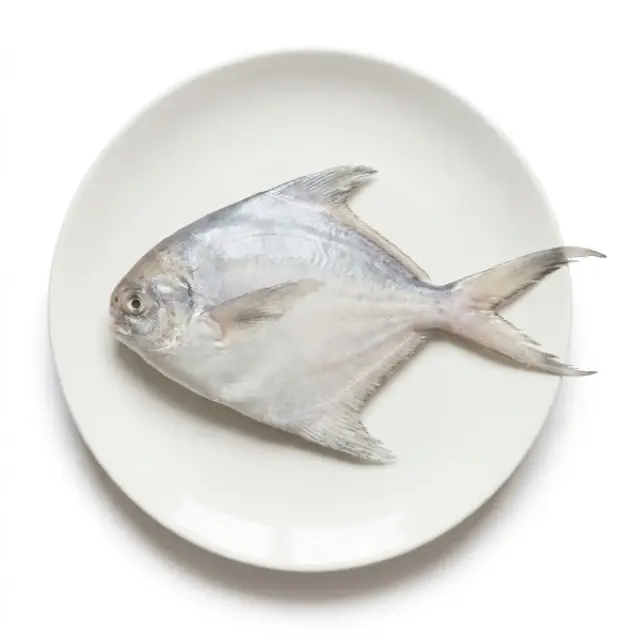
Fish in this guide: PomfretSardinePrawnsBhetki (Barramundi)Sole Fish Today's prices →
When Can Babies Eat Fish? A Simple Guide for Indian Parents
Most babies can start eating fish between 6 and 8 months of age. WHO says solid foods begin at about 6 months. ICMR-NIN’s 2024 guidelines say thoroughly cooked fish can be added in small amounts from eight months. Start with a mild, well-cooked, carefully deboned fish such as pomfret, mashed soft, with no salt.
Key points
- Age: solids from about 6 months; well-cooked fish in small amounts from 8 months (ICMR-NIN).
- First fish: mild, soft, easy to debone, such as paplet (pomfret), sole or boneless bhetki fillet.
- Amount: 1 to 2 teaspoons, mashed, with no salt or sugar.
- Method: one new food at a time, repeated for 4 to 5 days, watching for allergy signs.
- Avoid: mushi (shark), raw fish and crisp fried pieces.
Every number in this post comes from a source listed under Sources at the bottom.
This is general information, not medical advice. Every baby is different. Please check with your paediatrician before starting fish, especially if your baby has eczema, a food allergy, or was born early.
What do WHO, ICMR-NIN and the AAP say about fish for babies?
Three trusted bodies give advice on this. They agree on most things and differ slightly on the starting age.
| Source | What it says | Age |
|---|---|---|
| WHO (complementary feeding guideline, 2023) | Start solid foods at 6 months. Animal source foods, including meat, fish or eggs, should be eaten daily by children aged 6 to 23 months. | From 6 months |
| ICMR-NIN (Dietary Guidelines for Indians, 2024) | Start home-made semi-solid foods soon after six months. Thoroughly cooked whole eggs, fish and meat can be introduced in small quantities from eight months onwards. | Fish from 8 months |
| American Academy of Pediatrics (healthychildren.org) | Once a baby handles a few first foods, allergenic foods such as egg, dairy, wheat, fish and shellfish can be introduced. Delaying them does not prevent allergies. | Around 6 months |
| US FDA and EPA (Advice about Eating Fish) | For children aged 1 to 11, two servings a week from the low-mercury Best Choices list. | From 1 year |
So what should an Indian parent do? Our practical reading:
- 6 months: start solids with dal, rice and vegetables, as ICMR-NIN suggests.
- 6 to 8 months: fish can come in once your baby eats a few foods well. Talk to your paediatrician about the timing.
- By 8 months: ICMR-NIN’s own window for well-cooked fish has opened.
Both WHO and ICMR-NIN say breastfeeding should continue alongside solid foods, up to two years or beyond.
Why fish is a good early food
The US FDA says fish provide key nutrients that support a child’s brain development. It lists omega-3 fats (DHA and EPA), iron, iodine and choline, plus protein, vitamin B12, vitamin D and selenium. It adds that the iron and zinc in fish support children’s immune systems.
ICMR-NIN explains why this matters after six months. Babies of 6 to 12 months need 650 to 720 kcal and 9 to 10.5 g of protein a day. Breast milk then gives about 500 kcal and 5 g of protein.
The rest must come from food, and that food should be dense in nutrients. A spoon of fish adds good-quality protein without bulk.
Iron-rich foods for babies: where fish fits
Iron is one of the main reasons doctors talk about meat, fish and eggs at this age. NIH gives the iron need for babies of 7 to 12 months as 11 mg a day. That is a lot for small meals, so every iron source helps.
Fish helps in two ways, according to NIH and ICMR-NIN:
- Heme iron. Fish, meat and poultry contain heme iron, which the body absorbs better than the iron in plant foods. ICMR-NIN’s 2024 guidelines say iron from plant foods is poorly absorbed, but absorption is good from meat, fish and poultry.
- A boost for the rest of the plate. NIH notes that seafood, meat and poultry also help the body absorb the non-heme iron in dal, ragi and greens eaten in the same meal.
The fish itself carries only modest iron. Values per 100 g raw, from India’s food tables (IFCT 2017, ICMR-NIN):
| Fish (Marathi name) | Iron (mg per 100 g) | Good for a baby? |
|---|---|---|
| Bangda (Indian mackerel) | 1.46 | Higher iron, but fine bones; later, flaked with great care |
| Tarli (oil sardine) | 0.83 | Best Choice for mercury, many fine bones |
| Halwa (black pomfret) | 0.78 | Easy to debone |
| Kolambi (tiger prawns) | 0.39 | Shellfish: introduce on its own week |
| Paplet (white pomfret) | 0.31 | Easiest first fish, low in iron |
So fish is one iron food among several, not the whole answer. A practical way to use it:
- Mix fish into an iron-friendly base. Flaked fish in moong dal khichdi, or with mashed ragi or palak, combines heme iron with plant iron.
- Add a little vitamin C. ICMR-NIN names guava, orange and lemon among vitamin C foods that help iron absorption. A spoon of mashed fruit after the meal works for babies.
- Rotate with egg and dal. WHO advises meat, fish or eggs daily from 6 to 23 months. Fish does not need to be every day.
- Ask about drops. If your paediatrician suggests iron drops or a blood test, follow that advice. Food supports it; it does not replace it.
For the full iron table and how adults use it, see our guide to iron rich fish for anaemia.
Which fish are safe for babies? Low-mercury picks
Babies are small, so mercury matters more for them. The FDA/EPA chart groups fish by mercury. Here is how the fish sold in Thane and Mumbai fit.
| Group | Fish, with Marathi names | For your baby |
|---|---|---|
| FDA/EPA Best Choices | Sole, sardine (tarli), prawns (kolambi), crab (khekda), salmon | Good first fish, once cooked through and checked for bones |
| Low mercury in Indian data | Bombil, halwa, bhetki | IFCT 2017 measured low mercury; not on the FDA chart |
| No mercury data | Pomfret (paplet) | Mild and easy to debone; not on the FDA chart and IFCT gives no mercury figure |
| Avoid | Shark (mushi); go slow on surmai | Shark is on the FDA Choices to Avoid list; surmai’s close relative, king mackerel, is too |
A few notes:
- Pomfret is the fish most Thane families reach for first. It is soft, mild and has one central spine. It is not on the FDA chart, so the chart says nothing about it either way.
- Tarli is a Best Choice and rich in omega-3, but it has many fine bones. Keep it for later, or flake it with great care.
- Prawns and crab are shellfish. Shellfish is a separate allergen group from finned fish, so introduce them on their own, on a different week.
Our low-mercury fish guide explains the FDA lists and Indian data in detail.
How much fish should a baby eat?
Start tiny. One or two teaspoons of mashed fish is plenty for a first taste.
| Age | Guidance | Source |
|---|---|---|
| 6 to 8 months | First tastes: 1 to 2 teaspoons, mashed smooth | Our practical suggestion |
| 8 to 12 months | Small amounts; one sample meal uses 20 g of raw fish with bajra and ridge gourd | ICMR-NIN sample menu (Figure 4.3, 6 to 12 months) |
| 1 to 3 years | About 1 ounce (28 g) per serving, two servings a week from Best Choices | FDA/EPA |
ICMR-NIN also gives meal counts. A breastfed baby of 6 to 8 months needs complementary food at least twice a day. From 9 to 24 months, that rises to at least three times a day. Fish is one item in that rotation, not every meal.
How to introduce fish safely, step by step
ICMR-NIN suggests a simple method for any new food. Offer it alone, then keep giving it for 4 to 5 days in a row. This helps your baby accept it and shows up any intolerance or allergy.
- Pick one fish. Start with pomfret, sole or boneless bhetki fillet. Ask the seller to clean it for you.
- Cook it through. The US food-safety charts say fish should reach 145°F (63°C). Without a thermometer, cook until the flesh is no longer translucent and flakes easily with a fork.
- Debone twice. Remove the spine after cooking, then flake every bit between your fingers (see the next section).
- Mash smooth. Mix the fish with dal water, rice or potato until it spreads, not flows. ICMR-NIN says baby food should be semi-solid: it spreads on the plate, it does not run.
- Offer a small amount in the morning. That way you can watch your baby through the day.
- Repeat for 4 to 5 days. Do not add any other new food in that time.
- Watch for reactions. The AAP lists hives, itchy rashes, swelling, vomiting, diarrhoea, wheezing and coughing as signs of a food allergy. In babies, also look for eye rubbing, repeated tongue thrusting, excessive crying or back arching.
If any severe sign appears, such as swelling of the face or trouble breathing, get medical help at once. If your baby has severe eczema or has reacted to another food, the AAP says to talk to your paediatrician first.
How to debone fish for a baby
Bones are the biggest worry with fish for babies. A careful routine solves it.
- Choose low-bone fish. Pomfret, sole and boneless fillets of bhetki or basa are easiest. Avoid bangda, rohu and katla at this age; their fine bones hide well.
- Buy it cleaned. On Relifish you can ask the seller to clean and cut the fish the way you need. Fillets save the most effort.
- Cook first, debone after. Cooked flesh lifts off the spine in one piece. For pomfret, run a knife along the backbone, lift the top fillet, then pull out the spine.
- Flake with clean fingers. Rub every flake between your thumb and finger. Your fingers find bones your eyes miss.
- Mash with a spoon, not a mixer. A mixer can grind a missed bone into small sharp bits. Mashing by hand lets you feel it.
For the full cleaning method, read our guide on how to clean pomfret.
Three soft first fish recipes
All three use no salt and no sugar, as ICMR-NIN advises for baby food. Spice is optional; a pinch of haldi is enough.
1. Steamed pomfret mash (from first tastes)
- Steam a cleaned pomfret piece with a pinch of haldi until it turns opaque and flakes easily.
- Remove skin and bones. Flake by hand.
- Mash 1 to 2 teaspoons of fish with a little dal water or breast milk until smooth.
2. Fish and moong dal khichdi (from about 8 months)
- Pressure-cook 2 tablespoons rice and 1 tablespoon moong dal with a pinch of haldi and jeera until very soft.
- Stir in a few flakes of steamed, deboned fish and a few drops of ghee.
- Mash well. Thin with warm water if it is too thick.
3. Fish, potato and bhopla mash (from about 9 months)
- Boil a small potato and a few cubes of red pumpkin (lal bhopla) until soft.
- Add flaked, steamed bhetki or sole.
- Mash with a fork, leaving it slightly lumpy as your baby gets used to texture.
As your baby grows, you can move from smooth mash to soft lumps, then to the family’s mild fish curry. ICMR-NIN says a child should move to the family diet at about one year. Our guide to the best fish for kids takes over from there, with low-bone fish and toddler portions.
What to avoid
- Salt, sugar and masala-heavy food. WHO’s 2023 guideline says foods high in sugar, salt and trans fats should not be given to children aged 6 to 23 months.
- Raw or undercooked fish. No sushi, no half-cooked prawns.
- Fried fish with a rava crust. Hard edges can be a choking risk. Steamed or curry fish is softer.
- Fish that smells sour or of ammonia. The FDA says fresh fish should smell fresh and mild. When in doubt, throw it out.
- Leftovers kept too long. ICMR-NIN says cooked food should be eaten within 4 to 6 hours. Make baby fish fresh.
Buying fish for your baby in Thane
Buy a small amount, fresh, for the day you cook. Verified sellers on Relifish list pomfret, sole, prawns and other fish when they have them. Choose how it is cleaned and cut, pick a 2-hour delivery slot, and the seller delivers in Thane and nearby Mulund and Bhandup.
- Check what is in today on today’s fish prices, or browse the shop.
- Not sure of a fish’s name? See our fish names in English and Marathi.
- Still breastfeeding? Read fish for breastfeeding mothers.
What to do next: for a first taste, order one small pomfret, cleaned, and steam it today.
Related reading
- How Much Fish Should I Eat Per Week? India Guide
- How to Store Fish in Fridge and Freezer: Safe Times
Sources
- World Health Organization. WHO Guideline for complementary feeding of infants and young children 6–23 months of age (2023). Recommendation 4a: meat, fish or eggs daily. Recommendation 5a: no foods high in sugar, salt or trans fats.
- World Health Organization. Infant and young child feeding fact sheet. Exclusive breastfeeding for 6 months; complementary foods from six months.
- ICMR-National Institute of Nutrition. Dietary Guidelines for Indians 2024, Guideline 4, pages 26 to 29: solids from six months and fish from eight months. Also 4 to 5 days per new food, no salt or sugar, meal counts and the Figure 4.3 menu. Guideline 12, page 80: eat cooked food within 4 to 6 hours. PDF at nin.res.in.
- American Academy of Pediatrics, healthychildren.org. When to introduce egg, peanut butter and other common food allergens and Food allergies in children.
- US FDA and EPA. Advice about Eating Fish. Nutrients in fish, children’s serving sizes, Best / Good / Avoid lists.
- NIH Office of Dietary Supplements. Iron: Fact Sheet for Health Professionals. Iron RDA of 11 mg a day for infants 7 to 12 months; heme and non-heme iron; seafood and meat increase non-heme iron absorption.
- US FoodSafety.gov. Safe minimum internal temperatures. Fish 145°F (63°C).
- US FDA. Selecting and serving fresh and frozen seafood safely. Freshness smell checks.
- Longvah T et al. Indian Food Composition Tables 2017. ICMR-NIN. PDF at nin.res.in. Mercury values for bombil, halwa and bhetki, as cited in our low-mercury guide. Table 5 iron values: mackerel P034, sardine P071, pomfret black P055, tiger prawns orange Q008, pomfret white P057.
Frequently asked questions
At what age can I give fish to my baby?
Most babies can start fish somewhere between 6 and 8 months. WHO and the American Academy of Pediatrics say solid foods start at about 6 months. ICMR-NIN's Dietary Guidelines for Indians (2024) say thoroughly cooked fish can be given in small quantities from eight months. Ask your paediatrician which age suits your baby, especially if there is eczema or a food allergy in the family.
Which fish is best for a baby's first taste?
Start with a mild, soft, white fish that is easy to debone, such as pomfret (paplet), sole or boneless bhetki fillet. Sole and crab are on the US FDA/EPA Best Choices list for low mercury, and so are sardine (tarli) and prawns. Avoid shark (mushi) completely, and hold back on surmai, because its close relative king mackerel is on the FDA avoid list.
How much fish can a baby eat?
Start with one or two teaspoons of mashed fish. ICMR-NIN's sample week of baby meals (6 to 12 months) includes one bajra meal with 20 g of fish in place of dal. For children aged 1 to 3, the FDA/EPA average serving is 1 ounce (about 28 g), twice a week, from the Best Choices list. Your baby's appetite and your doctor's advice come first.
Should I add salt to my baby's fish?
No. ICMR-NIN says sugar or salt need not be added to complementary foods, and its baby recipes say to avoid both. WHO's 2023 guideline also says foods high in salt should not be given to children aged 6 to 23 months. Flavour baby fish with a pinch of haldi, jeera, a little ghee or mild dal instead of salt.
Is fish allergy common in babies?
Fish and shellfish are among the foods that cause most food allergies in children, according to the American Academy of Pediatrics. That is why fish should be introduced alone, in a small amount, and then repeated for 4 to 5 days as ICMR-NIN suggests for any new food. Watch for hives, swelling, vomiting or wheezing, and get medical help quickly if they appear.
How we write and check these guides: editorial standards
Share this article: