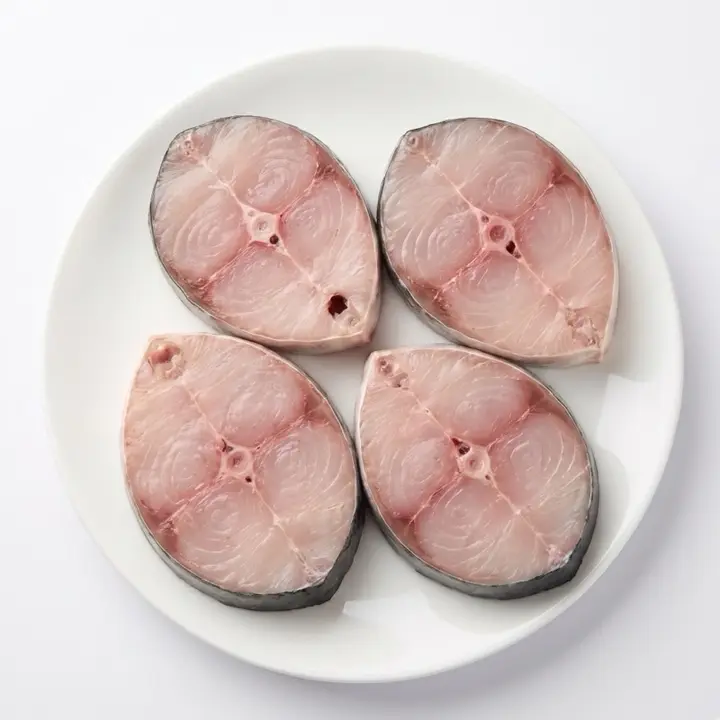
Fish in this guide: Surmai (Kingfish)Tuna (Kupa)Bangda (Mackerel)SardineRawas (Indian Salmon) Today's prices →
Does Fish Have Creatine? Yes, and Here Is How Much
Yes, fish has creatine. Raw fish carries about 0.3 to 1 g of creatine per 100 g, with herring at the top of published lists and cod lower, because creatine is a natural part of fish and meat muscle.
This is general information, not medical advice. Ask your doctor or a registered dietitian before starting, stopping or changing any supplement, including creatine.
Creatine is one of the most searched gym words in India right now. Most of that interest is about the powder in a tub. But creatine was in food long before it was in a tub. If you eat fish, you already eat some. This guide explains how much fish gives, why Indian fish are hard to pin down, and how food compares with a supplement. For the bigger protein picture, see our fish vs whey protein guide.
What is creatine, and why is it in fish?
Creatine is a compound your muscles use to recycle quick energy during short, hard effort. Think of a heavy set of squats or a sprint. Most of the body’s creatine sits in skeletal muscle.
That is why it shows up in food. When you eat fish or meat, you eat muscle, and muscle holds creatine. Plant foods have little or none.
Your body also makes its own. The International Society of Sports Nutrition (ISSN) position stand explains that the body needs about 1 to 3 g of creatine a day to keep normal stores, depending on muscle mass. About half comes from the diet. The rest is made mainly in the liver and kidneys from two amino acids, arginine and glycine.
How much creatine is in fish per 100 g?
There is no Indian government table for creatine in food. IFCT 2017, our usual source for Indian fish, does not list it. The figures most reviews quote come from older research samples of mostly northern fish, summarised in a 1994 review by Balsom and colleagues in Sports Medicine. Treat them as approximate.
| Food, raw | Creatine per 100 g (approx.) | Notes |
|---|---|---|
| Herring | 0.65 to 1 g | Highest among commonly measured fish |
| Salmon | about 0.45 g | Similar to beef |
| Tuna | about 0.4 g | Kupa, our little tuna, is a relative but not measured |
| Cod | about 0.3 g | A lean white fish |
| Beef | about 0.45 g | For comparison |
| Milk | about 0.01 g | Very little |
The ISSN paper gives a simple check that fits this table: a pound (about 450 g) of uncooked beef or salmon provides about 1 to 2 g of creatine.
What about Indian fish?
Surmai, bangda, rawas, tarli and pomfret have not been well measured for creatine. We could not find a reliable published figure for them, so we will not invent one. The honest answer is that sea fish of this kind are likely to fall somewhere in the general fish range above, roughly 0.3 to 1 g per 100 g raw. Fattier, darker fish may sit higher and lean white fish lower, but that is a pattern, not a measurement.
Does cooking reduce creatine in fish?
Yes, to some extent. Heat converts part of the creatine in muscle into creatinine, so cooked fish gives less than the raw numbers. Long, high heat probably loses more than a quick cook.
You do not need to eat fish raw for this. A surmai fry on the tawa, a bangda curry or a steamed patra ni machhi all keep the meal light. Our guide to healthy ways to cook fish covers methods that use less oil.
Fish vs a creatine supplement: what is the difference?
Creatine in fish and creatine monohydrate in a tub are the same molecule. The difference is the amount and what comes with it.
| Fish (100 g raw) | Creatine monohydrate supplement | |
|---|---|---|
| Creatine | About 0.3 to 1 g, less after cooking | A set amount per scoop, on the label |
| Protein | About 18 to 24 g in common Indian sea fish (IFCT 2017) | None |
| Omega-3 (EPA plus DHA) | Up to about 1 g in surmai (IFCT 2017) | None |
| Vitamin B12, vitamin D, selenium | Yes, in varying amounts (US FDA) | None |
| Who decides the amount | Your plate | Ask your doctor or dietitian |
The ISSN review says a normal mixed diet supplies about 1 to 2 g of creatine a day and keeps muscle stores about 60 to 80% full. It also notes that vegetarians tend to have lower muscle creatine stores. Supplements are designed to raise those stores further, which food alone rarely does.
We are not giving any supplement dose here. If you are thinking about creatine for training, a doctor or a registered sports dietitian can look at your kidneys, medicines and goals first.
The gym-goer’s plate: fish for protein, creatine and more
Creatine is only one part of a training diet. Fish earns its place for the protein. Using IFCT 2017, 150 g of raw surmai gives about 33 g of protein and 150 g of bangda about 32 g. Kupa, the little tuna, has about 24.5 g of protein per 100 g raw.
A simple week might look like this:
- Monday: Bangda curry with rice and dal.
- Wednesday: Surmai tawa fry with bhakri and salad.
- Friday: Rawas tikka or a rawas fry with chapati.
- Sunday: A tarli (oil sardine) fry, which also adds omega-3.
Our 7-day high protein fish diet plan for gym has full portions. To compare with chicken, read fish vs chicken protein per 100 g. If you are working out your daily target, start with how much protein per day for men.
Who should talk to a doctor first?
Food sources of creatine are part of normal eating. Supplements are different. Please speak to your doctor before any creatine product if you:
- Have kidney disease, or a family history of it.
- Have diabetes or high blood pressure.
- Take regular medicines.
- Are pregnant or breastfeeding.
- Are under 18 and training for sport.
A doctor may also want to know about any supplement before blood tests, because creatine intake can affect how some kidney test results are read.
Getting fresh fish for your training week
Verified sellers on Relifish in Thane list their fish daily. You choose how it is cleaned and cut: surmai in steaks, bangda gutted with slits, rawas in cubes for tikka. Order fish from verified sellers for delivery in Thane, Mulund and Bhandup, and check today’s fish prices in Thane before you plan your meals.
Sources
- Kreider RB, et al. International Society of Sports Nutrition position stand: safety and efficacy of creatine supplementation in exercise, sport, and medicine. J Int Soc Sports Nutr. 2017;14:18. Full text at PMC. Daily need, diet supply, beef and salmon content, vegetarians.
- Balsom PD, Söderlund K, Ekblom B. Creatine in humans with special reference to creatine supplementation. Sports Medicine. 1994;18(4):268 to 280. PubMed. Creatine content of herring, salmon, tuna, cod, beef and milk.
- Longvah T, et al. Indian Food Composition Tables 2017. ICMR-NIN. Protein and EPA plus DHA for Indian fish. Checked: no creatine values.
- US Food and Drug Administration. Advice about Eating Fish. Nutrients in fish.
Frequently asked questions
Does fish have creatine?
Yes. Creatine is found naturally in the muscle of fish and meat, because muscle uses it to store quick energy. Research reviews put raw fish at about 0.3 to 1 g of creatine per 100 g, depending on the species. Herring sits at the top of the published lists, salmon and tuna in the middle, and cod lower. Plant foods have little or none.
Which fish has the most creatine?
Among fish that have been measured, herring has the most, at about 0.65 to 1 g per 100 g raw. Salmon has about 0.45 g and tuna about 0.4 g, with cod near 0.3 g. Indian fish such as surmai, bangda and rawas have not been well measured for creatine, so we can only say they are likely to fall in the general fish range.
Can I get enough creatine from fish alone?
Fish adds to the creatine your body already makes, but it is hard to match a supplement from food. A sports nutrition review says a normal mixed diet gives about 1 to 2 g a day, and that a pound of raw beef or salmon gives about 1 to 2 g. Whether you need more than food gives is a question for your doctor or a dietitian.
Does cooking fish destroy creatine?
Cooking does reduce it. Heat turns part of the creatine in muscle into creatinine, so cooked fish usually gives somewhat less than the raw figures in tables. Gentle methods such as steaming, a curry or a short tawa fry are a sensible middle path. You still get the protein, omega-3 and vitamins that make fish worth eating anyway.
Do vegetarians have less creatine?
Studies report that vegetarians tend to have lower creatine stores in muscle, because natural creatine in food comes from meat and fish. The body still makes some creatine on its own in the liver and kidneys. If you are vegetarian and thinking about a supplement, talk to your doctor or a sports dietitian first.
Is creatine from fish safer than a creatine supplement?
Creatine from fish comes as part of a normal meal, so there is nothing to measure or dose. A creatine supplement is a concentrated product, and how much to take depends on your health, kidneys and training. Reviews call creatine monohydrate safe for healthy adults, but please ask your doctor or a dietitian before starting it, especially if you have kidney disease.
How we write and check these guides: editorial standards
Share this article: