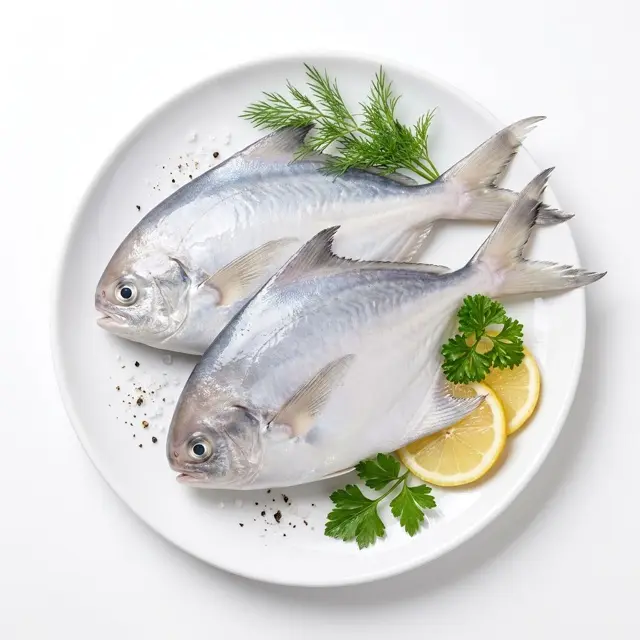
Fish in this guide: PomfretRawas (Indian Salmon)RohuBangda (Mackerel)Prawns Today's prices →
Fish for Kidney Patients: What to Eat, How Much and How to Cook
Most kidney patients can eat fish. How much, and which kind, depend on your stage of kidney disease, your blood reports and whether you are on dialysis.
The US National Kidney Foundation (NKF) says most people with kidney disease or a transplant do not have to limit fish. People in later stages may need smaller portions. People on dialysis often need more protein. Simple fresh fish like pomfret, rawas or rohu, cooked at home with little salt, is the usual starting point. Salted dry fish is not.
Quick answer
- Early kidney disease or a transplant: most people do not need to limit fish (NKF).
- Later stages before dialysis: your doctor may cut protein, so fish portions get smaller.
- On dialysis: you usually need more protein. NKF suggests fish twice a week.
- Avoid sukat, dry bombil, fish pickle and canned fish unless your dietitian allows them.
- Buy plain fresh fish, not ready-marinated packs, to avoid salt and phosphate additives.
This guide explains why. It cannot give you your numbers. Only your nephrologist and kidney dietitian can do that.
This is general food information, not medical advice. Kidney diets are personal. Please follow your nephrologist and dietitian, and do not change your protein, potassium, phosphorus, salt or fluid intake on your own.
Why kidney patients need a careful fish plan
Healthy kidneys balance salts and minerals in the blood. NIDDK, part of the US National Institutes of Health, explains that in chronic kidney disease (CKD) the kidneys cannot filter the blood as they should. Food choices then affect how much the kidneys have to handle.
Fish touches four of the nutrients a kidney team watches:
| Nutrient | Why it matters in CKD (NIDDK, NKF) | Where fish fits |
|---|---|---|
| Protein | Protein breaks down into waste the kidneys must remove. Too little causes malnutrition. | Fish is high-quality protein, so the portion matters |
| Phosphorus | Damaged kidneys cannot remove it well. High levels can weaken bones and harm blood vessels. | All fish has natural phosphorus; some fish has more |
| Potassium | Levels can climb too high, which can cause heart and muscle problems | Varies between fish |
| Sodium | Too much makes the body hold fluid, raising blood pressure and causing swelling | Fresh fish is low; salted, dried and canned fish are not |
NIDDK says there is no single meal plan for everyone with CKD. In early stages you may have few limits. As CKD advances, the list of changes grows.
Protein: the stage decides the portion
This is the biggest point, and it confuses many families.
- Early CKD and transplant. NKF says most people do not have to limit fish.
- Later stages, before dialysis. NKF says a doctor may limit protein. Fish can still be a great option, in smaller portions. NIDDK adds that your team may suggest limiting meat and dairy and getting the rest of your protein from plants. It also suggests lean meats that are low in phosphorus.
- On dialysis. The advice flips. NIDDK says people on dialysis may need more protein, because dialysis removes protein from the blood. It notes peritoneal dialysis removes more protein than hemodialysis. NKF suggests including fish two times a week as a lean protein option for people on dialysis.
To picture a portion, NKF says a 3 ounce piece of fish gives about 20 g of protein. That is about 85 g, the size of a deck of cards. Your dietitian may give you a number in grams. Ask them to translate it into pieces of pomfret or rawas you can see.
ICMR-NIN’s Dietary Guidelines for Indians (2024) also caution that high protein intake may worsen kidney function in people who already have kidney disease. So this is not a diet to “bulk up” on fish.
Potassium, phosphorus and sodium in fish
The NKF publishes a chart for cooked fish. These are US fish, not Indian species, but they show how much the numbers vary.
Per 100 g cooked fish (NKF):
| Fish | Potassium (mg) | Phosphorus (mg) | Sodium (mg) |
|---|---|---|---|
| Mackerel | 558 | 318 | 203 |
| Salmon | 439 | 313 | 90 |
| Tilapia | 380 | 204 | 56 |
| Catfish | 366 | 247 | 119 |
| Sardines, canned | 397 | 490 | 307 |
| Tuna, light, canned in water | 176 | 137 | 219 |
Three things stand out:
- Fish differ a lot. Mackerel has much more potassium than canned light tuna. Your dietitian picks fish against your own blood potassium.
- Sardines are high in phosphorus. NKF’s phosphorus guide lists sardines, oysters and fish roe among high-phosphorus protein foods to limit or avoid. In Mumbai terms, that means asking before you eat tarli, oysters or fish eggs.
- Canned fish carries more sodium. NKF says to choose fresh fish when possible because it is lower in sodium.
We did not find a trusted kidney-diet chart for Indian fish like pomfret or rawas. So we do not guess their numbers here. Your dietitian can work from India’s food composition tables.
NKF gives a normal blood phosphorus level of 2.5 to 4.5 mg/dL. Ask your doctor for your last result and keep a note of it.
Why salted dry fish is a problem
Many Konkan homes love sukat (dry fish), dried bombil and dry prawns. For a kidney patient, these are the first things to discuss with the dietitian.
- Salt is how they are preserved. NIDDK explains that too much sodium makes the blood hold fluid. That raises blood pressure and causes swelling, stressing the kidneys and heart.
- The general limit is already tight. NIDDK quotes the US limit of 2,300 mg of sodium a day for adults. It says many people with CKD need to limit sodium even more. Your doctor sets your limit.
- Hidden salt adds up. Fish pickles, ready masalas, stock cubes, sauces and papad all carry sodium.
Fresh fish, cooked at home, lets you control the salt. NIDDK suggests cooking from scratch and using herbs, spices and lemon juice in place of salt.
Watch for phosphate additives
NKF explains two kinds of phosphorus. Natural phosphorus in protein foods is partly absorbed. Phosphorus added as an additive or preservative is completely absorbed. NIDDK says additives are the main source of phosphorus for many people.
- Read labels on packaged, marinated or frozen seafood. Look for “PHOS” in the ingredients, such as sodium tripolyphosphate or disodium phosphate.
- Plain fresh fish has no additive list. That is one reason to buy whole fish and have it cleaned, rather than ready-to-fry packs.
How to cook fish for a kidney diet
A practical approach for an Indian kitchen, built on NIDDK’s advice:
- Start with fresh fish. Pomfret, rawas, rohu or bangda, in the portion your dietitian sets.
- Cut the salt in the marinade. Use turmeric, ginger, garlic, green chilli, coriander and a squeeze of lemon. NIDDK suggests lemon, herbs and peppers as salt alternatives.
- Skip salt substitutes unless approved. NIDDK warns that salt substitutes can be high in potassium.
- Grill, bake, steam or stir-fry. NIDDK lists these in place of deep-frying, as part of heart-healthy eating. People with CKD have a higher risk of heart disease.
- Keep curries thin on salt and measure gravy. If your team limits fluids, the gravy counts.
- Cook fish well if you have a transplant. NKF says transplant patients should avoid raw or undercooked fish because of a higher risk of food poisoning.
A note on leaching: NIDDK mentions boiling and leaching to lower potassium in certain vegetables. That advice is about vegetables. Ask your dietitian before applying any such method to fish.
A simple kidney-friendly fish plate
| Part of the plate | Example | Ask your dietitian |
|---|---|---|
| Fish | One small piece of steamed pomfret or grilled rawas | Portion in grams |
| Vegetables | Lower-potassium sabzi chosen with your dietitian | Which vegetables suit your potassium |
| Grain | Rice or rotis | Portion and type |
| Flavour | Lemon, coriander, garlic, green chilli | Whether any spice blend is too salty |
A mild fish like white pomfret works well for this. Our how to clean pomfret guide shows the cuts. For general protein facts, see our fish protein guide. If you also have diabetes, the fish for diabetes guide covers the rice side of the plate.
Questions to take to your next appointment
- How many grams of protein should I eat a day, and how much of that can be fish?
- Do my potassium and phosphorus reports mean I should avoid any fish?
- What is my daily sodium limit?
- Is there a fluid limit that affects curries?
- Can I have dry fish on special occasions, and how much?
Write the answers down. They are worth more than any general article.
Buying tips in Thane and Mumbai
- Buy fresh, whole fish and ask for it to be cleaned and cut. You avoid additives and added salt.
- Choose a size you can portion. A small pomfret or a few rawas slices are easier to measure than a big fish.
- Avoid pre-marinated packs unless you can read the ingredient list.
- Mind mercury with big fish. NKF notes larger fish like tuna and shark may have high mercury. Our low-mercury fish guide lists safer picks.
- Plan around prices. They change daily with the catch. See today’s fish prices.
Getting fresh fish in Thane
Verified sellers on Relifish list pomfret, rawas, rohu, bangda and prawns when they have them. You choose how the fish is cleaned and cut, so you can order small slices that suit your portion. Order for today or pre-order for a later day, and pick a 2-hour delivery slot in Thane, Mulund or Bhandup.
What to ask for at the counter
| Fish | Cut to ask for | Why it helps |
|---|---|---|
| Pomfret (paplet) | Small whole fish, or two halves | Easy to see one portion |
| Rawas (Indian salmon) | Thin boneless slices | Weigh and freeze portions ahead |
| Rohu | Curry-cut pieces, belly removed | Mild taste with little salt |
| Bangda | Whole, gutted | Small fish are easy to count and portion |
A simple kitchen scale helps a lot. Weigh one portion once, then you will know it by eye.
What to do next: take the questions above to your dietitian, then check today’s fish prices and order plain fresh pomfret or rawas from the shop.
Related reading
- Fish for High Blood Pressure: Salt, Omega-3 and Potassium
- How Much Fish Should I Eat Per Week? India Guide
Sources
- National Institute of Diabetes and Digestive and Kidney Diseases (NIDDK). Healthy Eating for Adults with Chronic Kidney Disease. Protein, phosphorus, potassium, sodium (2,300 mg general limit), salt substitutes, leaching of vegetables, cooking methods, dialysis protein needs.
- National Kidney Foundation. Fish. Stage-based advice, 3 oz portion and 20 g protein, dialysis twice a week, transplant and raw fish, fresh vs canned, cooked fish potassium, phosphorus and sodium chart.
- National Kidney Foundation. Phosphorus and Your CKD Diet. Normal level 2.5 to 4.5 mg/dL, high-phosphorus proteins, additives completely absorbed, “PHOS” label check.
- ICMR-National Institute of Nutrition. Dietary Guidelines for Indians 2024. PDF at nin.res.in. Caution on high protein intake with existing kidney disease.
Frequently asked questions
Can kidney patients eat fish?
Usually yes, but the amount depends on you. The US National Kidney Foundation (NKF) says most people with kidney disease or a transplant do not have to limit fish. In later stages, a doctor may limit protein, so portions get smaller. People on dialysis often need more protein. Your nephrologist or kidney dietitian should set your portion and how often you eat fish.
Which fish is good for kidney patients in India?
Fresh, plain fish cooked at home with little salt is the safest starting point. Mild fish like pomfret, rawas, rohu and bangda are easy to portion and cook simply. Potassium and phosphorus vary between fish, so your dietitian may prefer some over others based on your blood reports. Avoid salted dry fish and pickled or canned fish unless your dietitian allows them.
Is dry fish safe for kidney patients?
Salted dry fish such as sukat or dried bombil is best avoided unless your dietitian says otherwise. It is preserved with salt, and NIDDK explains that too much sodium makes the body hold fluid, raising blood pressure and causing swelling, which stresses the kidneys and heart. Many people with kidney disease need to limit sodium more than the general 2,300 mg a day.
Is fish high in phosphorus?
Fish has natural phosphorus, like all protein foods. The NKF lists fish among lower-phosphorus protein alternatives, but lists sardines, oysters and fish roe among high-phosphorus foods to limit. It also notes that phosphorus added to processed foods as additives is completely absorbed. Fresh fish without additives, in a portion your dietitian sets, is the usual approach.
How much fish can a dialysis patient eat?
People on dialysis usually need more protein, because dialysis removes protein from the blood. The NKF suggests including fish two times a week as a lean protein option for people on dialysis. It also says to choose fresh fish, which is lower in sodium than canned fish. Your kidney dietitian will set the exact portion based on your dialysis type and blood tests.
How we write and check these guides: editorial standards
Share this article: